BIENNALE DE VENISE 2026 : LA BIENNALE DEVOILE LES 111 ARTISTES DE SON EXPOSITION CENTRALE, « IN MINOR KEYS »
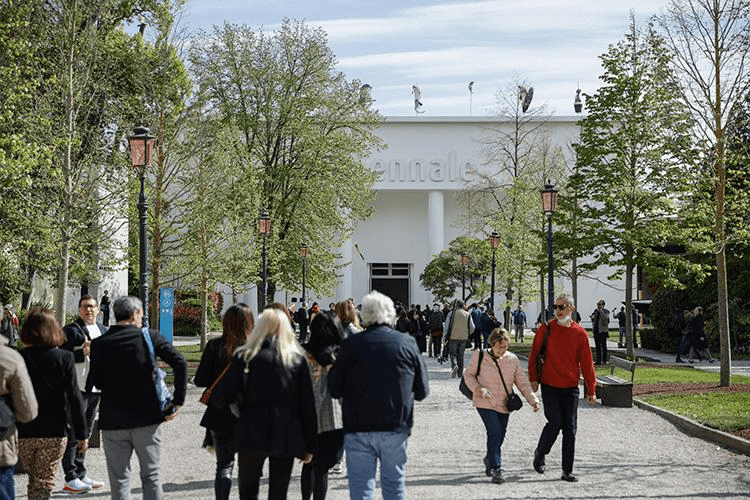
61e BIENNALE ARTE DE VENISE – « In Minor Keys » – Pavillon central, Giardini et Arsenale, Venezia – 9 mai – 22 novembre 2026.
Ce 25 février, La Biennale Arte a dévoilé les 111 artistes participant à l’exposition centrale de la Biennale, « In minor Keys », curatée par Koyo Kouoh avant sa disparition en 2025. Celle-ci se tiendra dans le Pavillon de la Biennale aux Giardini ainsi qu’à l’Arsenale.
Cette liste d’invités accorde une grande place au Sud global, avec nombre d’artistes provenant d’Afrique, d’Amérique latine, d’Asie, du Moyen-Orient, des Caraïbes… Une volonté de la curatrice Koyo Kouoh d’ouvrir plus encore La Biennale Arte au Sud, mais la présence de nombreux Anglo-saxons et d’Européens s’inscrit dans la tradition pro-occidentale de La Biennale depuis sa création…
« IN MINOR KEYS », l’exposition :
Intitulée In Minor Keys, cette édition 2026 concrétise la vision de la regrettée commissaire Koyo Kouoh et sera portée par un groupe de conseillers qu’elle avait nommés avant sa disparition en mai dernier. L’équipe réunit les conseillers Gabe Beckhurst Feijoo, Marie Helen Pereira, Rasha Salti, son assistante Rory Tsapayi et le critique Siddhartha Mitter. Il n’y aura pas de Lion d’or pour l’ensemble d’une carrière cette année, Kouoh n’ayant pas encore arrêté ses choix.
Parmi les 111 noms annoncés, on retrouve des artistes individuels, des duos collaboratifs, des collectifs et des structures menées par des artistes. Bien que nettement plus resserrée que Stranieri Ovunque – Foreigners Everywhere en 2024, qui réunissait 331 participants, In Minor Keys met davantage l’accent sur l’ampleur géographique, avec un focus prononcé sur les artistes du Global South et une nette augmentation du nombre d’artistes vivants.
L’exposition s’articulera autour de grands motifs — « Shrines », « Procession », « Schools », « Rest », « Performances » — et explorera des registres émotionnels subtils et les fréquences poétiques de la pratique artistique, en tissant des liens avec la musique et la poésie, comme l’a détaillé l’équipe curatoriale lors d’une conférence de presse plus tôt dans la journée.
Parmi les artistes invités, citons Alfredo Jaar, Kader Attia, Alvaro Barrington, Laurie Anderson, Annalee Davis, Godfried Donko, Joana Hadjithomas & Khalil Joreige, Nick Cave, Ayrson Heráclito, Natalia Lassalle-Morillo, Guadalupe Maravilla, Tuấn Andrew Nguyễn, Otobong Nkanga, Wardha Shabbir, Vera Tamari, Sawangwongse Yawnghwe… Et le toujours très jeune Marcel Duchamp…
« L’exposition In Minor Keys se présente comme une partition collective composée avec des artistes qui ont bâti des univers d’imagination. Des artistes qui travaillent aux frontières de la forme, et dont les pratiques peuvent être envisagées comme des mélodies complexes à écouter à la fois collectivement et selon leurs propres termes. Ce sont des artistes dont la pratique se fond naturellement dans la société », écrivait Kouoh dans une note curatoriale.
« Des artistes qui intègrent le quotidien dans une relation entre les éléments à la fois logique et esthétiquement cohérente. Des artistes d’une extrême générosité, profondément hospitaliers à la vie. »
THE COMPLETE LIST OF INVITED ARTISTS : https://www.labiennale.org/en/news/biennale-arte-2026-invited-artists
______________________
The Exhibition, IN MINOR KEYS, by Koyo Kouoh
The 111 invited participants of this exhibition – among them, individual artists, collaborative duos, collectives, and artist-led organisations – hail from many geographies and regions selected by Koyo with particular attention to resonances, affinity, and and possible convergences between practices, even when far apart. In looking to artists working in Salvador, Dakar, San Juan, Beirut, Paris, or Nashville, for example, Koyo sought to envision how their ingenuity, breadth of material experimentation, and visionary ideas bear connections to other artists and movements in simultaneity. In this spirit, In Minor Keys expands upon Koyo’s relational geography of encounters with artists over her lifetime.
Motifs. Koyo saw several conceptual motifs guiding the exhibition. These were not abstractly determined but rather sifted from a reservoir of art that acts deeply on the soul and mind. They brought into focus a compositional method for the exhibition, which is not organised according to sections but rather in respect of undercurrent priorities. Among these are “Shrines” – in which prominence is given to the practices of two lodestar artists while exceeding a retrospective impulse; processional assemblies; enchantment in the face of cynicism about what art can do; spiritual and physical rest opened up by the oases – the keys or small islands of artists’ universes; and finally, Koyo’s commitment to artist-centred institution building or “Schools”, in which energy and resource is directed towards a social purpose.
Literary references. These strands leap from practice to practice, snaking an intergenerational path to build across the sites of In Minor Keys. During the curatorial work, many ideas resonated with the literary references shared by Koyo as sources of inspiration, among them, Beloved by Toni Morrison and One Hundred Years of Solitude by Gabriel García Márquez, texts that connect in their evocation of thresholds between lifeworlds and temporalities and by a magical realism which deepens rather than distracts from an emotional register.
Shrines. Sala Chini, which leads visitors to the core of the Central Pavilion, announces the vocabulary of the “Shrines”, which Koyo envisaged as tributes to two incandescent worldmakers: Issa Samb (1945–2017) and Beverly Buchanan (1940–2015). An artist, poet, playwright, and co-founder of the revolutionary collective Laboratoire Agit’Art in Dakar, Samb was an enduring presence, mentor, and inspiration for Koyo, who honoured his practice and life philosophy in international projects. Buchanan’s artmaking, which Koyo encountered more recently, encompassed subtle and confronting readings of locations and communities through anti-monumental approaches to Land Art and public sculpture, which she often placed in sites of charged memory. Both artists recognised the significance of art as generative, surpassing mere objecthood, and evading conventional preservation.
Procession. The procession’s motif, inspired by carnival choreographies and Afro-Atlantic gatherings, expresses a dynamic spacial language in which joining the crowd, rather than observing, is requisite and implied. In this carnivalesque dimension, capable of suspending and subverting hierarchies, many artistic practices challenge archives and canons, reinterpret established symbols, and demystify dominant narratives through transhistorical, speculative, or rigorous approaches.
Schools. The “Schools” emerge as ecosystems rooted in their local territories and, at the same time, transnational: spaces of learning and regeneration founded on encounter, shared knowledge, and autonomy from market forces. Integrated into the constellation of the exhibition, they reflect a shared ethic and a collaborative practice that intertwines art and social responsibility.
Rest. Themes such as the plantation, colonial settlement, environmental disaster, and geological memory traverse other works, which confront seismic events and their traces through radical and liberatory methods. At the same time, the Creole garden and the courtyard — spaces of self-sufficiency born under conditions of constraint — become both real and metaphorical places of rest, reconnection, and engagement with non-human forms of life. The Exhibition ultimately reflects on the possibility of stepping back from the encyclopedic impulse to make room for rest, contemplation, and deep listening. Multisensory installations encourage rêverie and enchantment, inviting visitors to slow down and allow themselves to be transformed by the experience. Through oases that evoke studios, courtyards, and learning spaces, In Minor Keys conveys the spirit of a project that weaves together collaboration, generosity, and trust in the multiple dimensions of our shared humanity.
Performances. The program of performances centres the body as a site of knowledge and memory, as well as a political vessel for collective resistance and healing.
A procession of poets will take place in the Giardini della Biennale, inspired by Koyo’s Poetry Caravan, a voyage she undertook with nine African poets from Dakar to Timbuktu in 1999. The performance honours her memory and opens a space for poetry and storytelling. It pays homage to the griots those who seek the source human dream to spread the wings of knowledge and power. In the Giardini of La Biennale, poets will assemble to form a chorus vested with the power of the word, the groundswell of recital and spiritual healing.










 INFERNO