« PANORAMA », POZZUOLI : LE COLLECTIF COMME SCENE
« Quatre façons de penser le collectif : de Berlin à Pozzuoli » – Chap. IV. « Panorama » – Pozzuoli : le collectif comme scène
Panorama est une exposition de cinq jours réunissant quarante-sept artistes, déployée à travers la ville bimillénaire de Pouzzoles. Fondée comme colonie grecque en 531 av. J.-C., la ville est parsemée de ruines grecques et romaines, d’architecture baroque et de caldeiras volcaniques.
Ici, le collectif se manifeste à travers la pluralité des galeries participantes, venues de toute l’Italie. Italics, le réseau de soixante-dix galeries d’art ancien, moderne et contemporain, est à l’origine de Panorama, lancé en 2020 au cœur de la pandémie, à un moment où les artistes peinaient à maintenir leur pratique. C’est une exposition collective itinérante qui s’installe chaque année dans une ville différente, souvent méconnue, et chaque édition fait appel à un nouveau commissaire. Cette année, c’est Chiara Parisi qui a choisi pour thème la déification, ou apothéose — l’acte par lequel une personne, une idée ou une chose est élevée au rang de divinité.
Omniprésente dans l’histoire de l’art, en particulier grec et romain, cette notion trouve à Pouzzoles une résonance singulière. « Les Champs Phlégréens sont un territoire où le mythe est devenu géographie : les dieux y ont vaincu les géants, le lac Averne était la porte des Enfers, la Solfatare la forge d’Héphaïstos », explique Parisi. « Les artistes ont voulu se confronter à cette énergie. Certaines œuvres ont été conçues en dialogue direct avec les volcans et les traces du territoire, amplifiant l’idée d’un paysage qui est lui-même une œuvre vivante. »
À Pozzuoli sont réunis des artistes contemporains — dont Maurizio Cattelan, qui y fait également événement avec deux nouvelles œuvres — et des sculptures romaines datant du IIᵉ siècle apr. J.-C., ainsi que des peintres et sculpteurs des XVIIᵉ et XVIIIᵉ siècles tels que Luca Giordano, Luigi Primo et Matteo Bottigliero.
Lorenzo Fiaschi, codirecteur de la Galleria Continua et cofondateur d’Italics, explique : « Les galeristes ne sont pas seulement des vendeurs d’art. Ils soutiennent la création artistique, et les galeries sont des lieux de production culturelle. Panorama est un exercice de construction de ponts qui met en lumière le rôle culturel des galeries. » Il ne s’agit pas non plus d’une foire, mais d’un projet culturel soutenu par l’UNESCO. « Le “profit” pour les galeries, c’est le respect renouvelé : celui des communautés et du pays qui voient en elles des acteurs culturels », ajoute Fiaschi.
Timothée Chaillou, à Pozzuoli
___________________________
« Four ways of thinking about the collective: from Berlin to Pozzuoli »
Chap. IV. « Panorama » – Pozzuoli: the collective as a stage
Panorama is a five-day exhibition featuring forty-seven artists, spread across the two-thousand-year-old city of Pozzuoli. Founded as a Greek colony in 531 BC, the city is dotted with Greek and Roman ruins, Baroque architecture, and volcanic calderas.
Here, the collective is evident through the diversity of participating galleries, drawn from all over Italy. Italics, the network of seventy galleries of ancient, modern, and contemporary art, is behind Panorama, launched in 2020 at the height of the pandemic, at a time when artists were struggling to maintain their practice. It is a traveling group exhibition that is presented each year in a different, often little-known, city, and each edition features a new curator. This year, Chiara Parisi has chosen deification, or apotheosis, as her theme—the act by which a person, idea, or thing is elevated to the status of divinity.
Omnipresent in the history of art, particularly Greek and Roman, this notion finds a singular resonance in Pozzuoli. “The Phlegraean Fields are a territory where myth became geography: the gods defeated the giants there, Lake Avernus was the gateway to the Underworld, and the Solfatara was the forge of Hephaestus,” explains Parisi. “Artists wanted to confront this energy. Some works were conceived in direct dialogue with the volcanoes and the traces of the territory, amplifying the idea of a landscape that is itself a living work.”
Pozzuoli brings together contemporary artists—including Maurizio Cattelan, who is also making a splash with two new works—and Roman sculptures dating back to the 2nd century AD, as well as 17th- and 18th-century painters and sculptors such as Luca Giordano, Luigi Primo, and Matteo Bottigliero.
Lorenzo Fiaschi, co-director of Galleria Continua and co-founder of Italics, explains: « Gallery owners are not just art sellers. They support artistic creation, and galleries are places of cultural production. Panorama is a bridge-building exercise that highlights the cultural role of galleries. » « It’s not a fair either, but a cultural project supported by UNESCO. « The ‘profit’ for the galleries is renewed respect: that of the communities and the country that see them as cultural actors, » adds Fiaschi.
Timothée Chaillou, in Pozzuoli
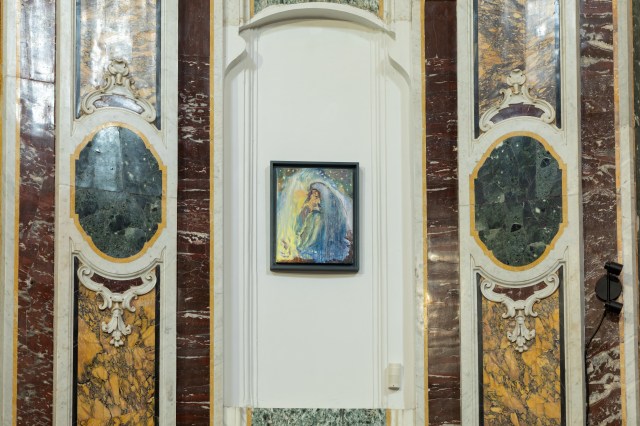
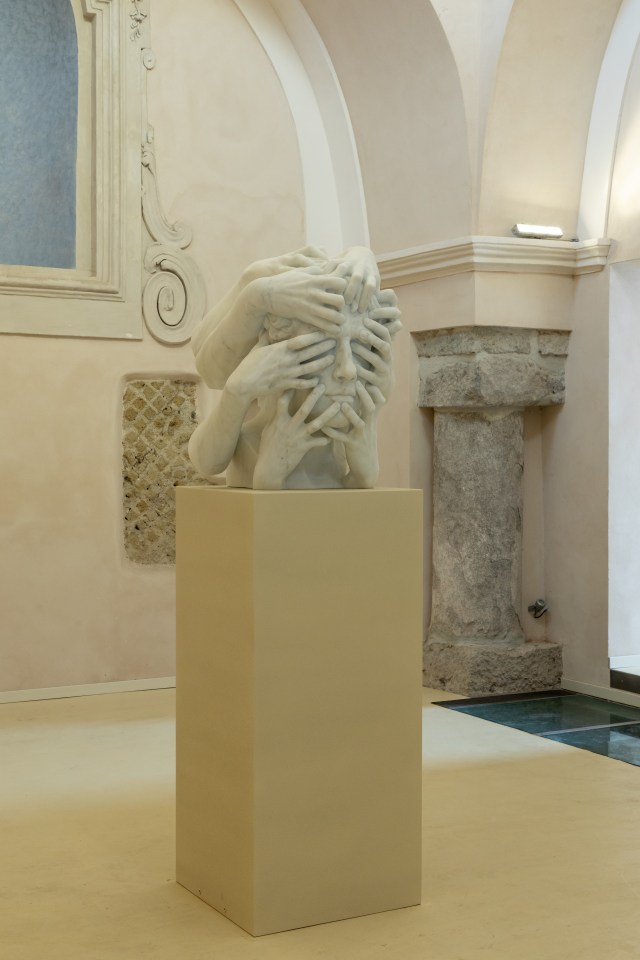
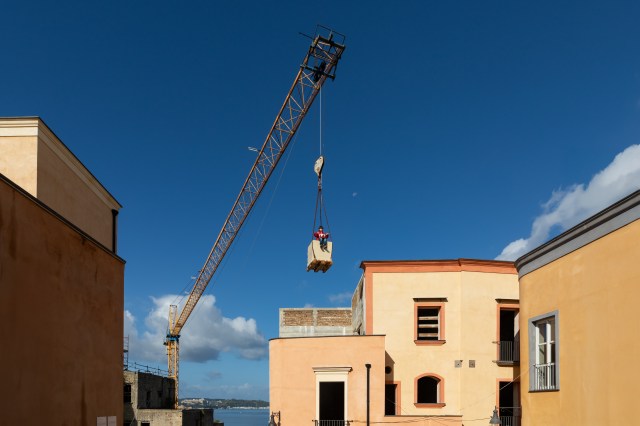

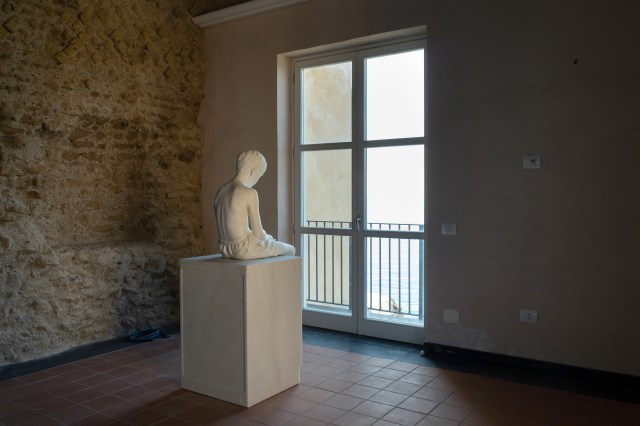
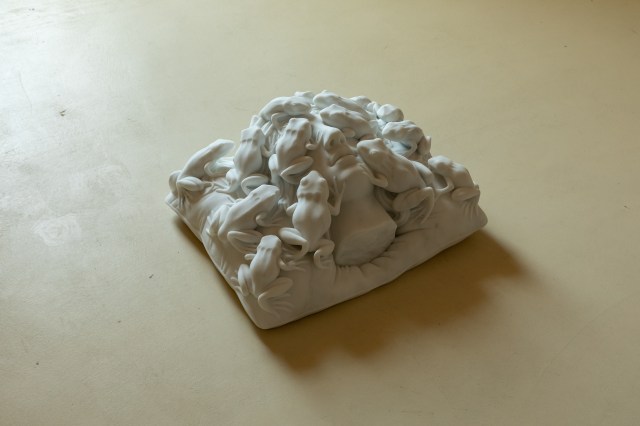 Images: 1- Elmgreen and Dragset 60 Minutes (Marble), 2024 Courtesy the artist and Massimo de Carlo – 2- Celia Paul Madonna and Child and The Fire 2025 Courtesy dellÔÇÖartista e Victoria Miro – 3-Maurizio Cattelan Virus, 2025 Courtesy Artist and Gagosian – 4- Maurizio Cattelan Senza titolo, 2003 Courtesy The Rochofsky Collection and Gagosian – 5- William Kentridge Sibily 2020 Courtesy of the artist and Galleria Lia Rumma – 6- Maurizio Cattelan Rain, 2025 Courtesy Artist and Gagosian










 INFERNO