« THE HOUSE ON UTOPIA PARKWAY » : À PARIS, WES ANDERSON RECRÉE L’ATELIER NEW-YORKAIS DE L’ARTISTE PRÉCURSEUR JOSEPH CORNELL
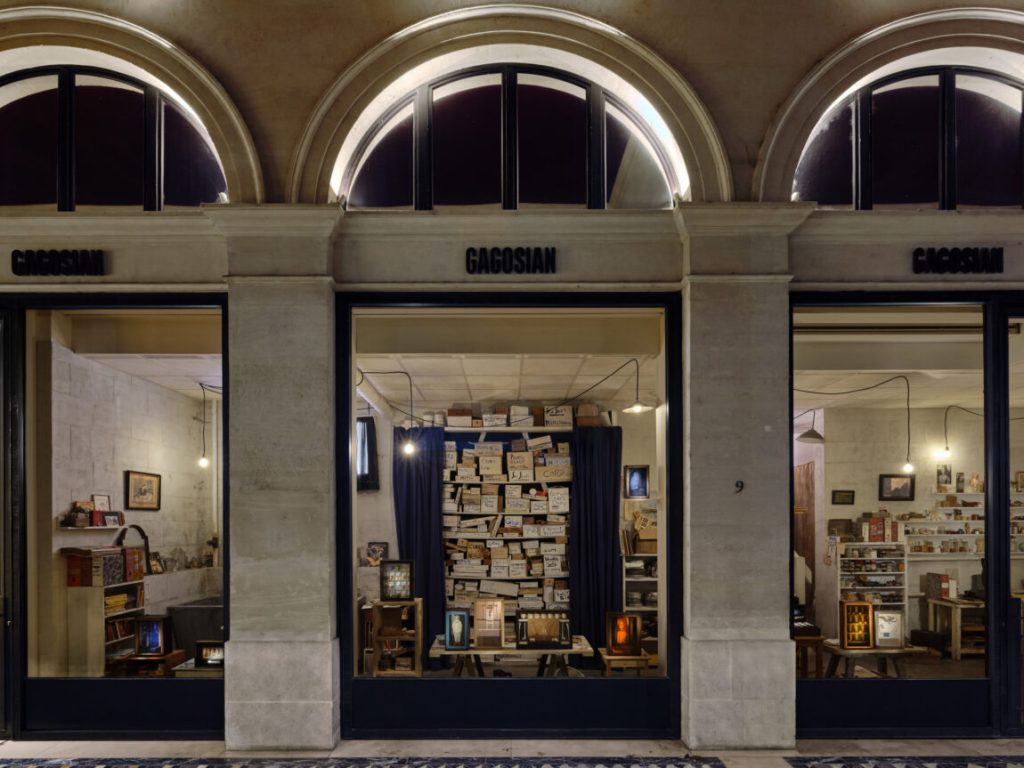
« The House on Utopia Parkway: Joseph Cornell’s Studio Re-Created by Wes Anderson » – Galerie Gagosian 9 rue de Castiglione, Paris – Jusqu’au 14 mars 2026.
L’oeuvre de Joseph Cornell, artiste atypique, parfaitement autodidacte, ami de Marcel Duchamp, fait partie de l’univers artistique du cinéaste Wes Anderson. De The Grand Budapest Hotel, Moonrise Kingdom ou Fantastic Mr. Fox, Joseph Cornell est une référence totémique de la filmographie de Wes Anderson. Avec « The House on Utopia Parkway » Wes Anderson recrée l’atelier mythique de Cornell et rassemble ses iconiques assemblages d’objets et ses collages, dans une mise en espace remarquable à la galerie parisienne de Gagosian.
« The House on Utopia Parkway: Joseph Cornell’s Studio Re-Created by Wes Anderson », est une exposition conçue par le commissaire Jasper Sharp et le célèbre cinéaste américain Wes Anderson. Présentée à partir du 16 décembre 2025, l’exposition transporte l’atelier new-yorkais de l’artiste au cœur de Paris, transformant la galerie du 9 rue de Castiglione en un tableau soigneusement mis en scène, à la fois capsule temporelle et boîte en trois dimensions grandeur nature, pour la première présentation individuelle des œuvres de Cornell à Paris depuis plus de trente ans.
Joseph Cornell (1903–1972) ne savait ni dessiner, ni peindre, ni sculpter, et n’avait reçu aucune formation artistique, il a pourtant créé l’une des œuvres les plus originales et marquantes du XXe siècle. Bien qu’il n’ait jamais quitté les États-Unis, la ville de Paris occupait une place importante dans son imaginaire. Il en arpentait les rues à travers des cartes postales, des guides et des conversations avec son ami Marcel Duchamp; il a consacré des dizaines d’œuvres à ses poètes, palais et figures.
Dans la modeste maison familiale d’Utopia Parkway, dans le Queens à New York, qu’il partageait avec sa mère et son frère, il travaillait dans un atelier en sous-sol entouré d’étagères garnies de boîtes à chaussures blanchies et de boîtes en fer remplies d’objets récoltés lors de ses explorations dans les librairies, les antiquaires et les bazars de Manhattan. Il appelait cette collection d’estampes, plumes, cartes, billes, jouets, coquillages et autres objets son « département des pièces détachées ». C’est là qu’il puisait la matière première de ses collages, assemblages et boîtes objets, qui allaient influencer plusieurs générations d’artistes—de Yayoi Kusama, Robert Rauschenberg, Betye Saar, Carolee Schneemann et Andy Warhol, jusqu’à de nombreux artistes aujourd’hui. C’est cet univers que Wes Anderson, et plusieurs de ses collaborateurs de longue date, avec la scénographe Cécile Degos, font revivre à Paris à travers plus de trois cents objets et curiosités issus de la collection personnelle de Joseph Cornell.
Dans ce décor évocateur, plusieurs de ses célèbres boîtes—poétiques reliquaires de mémoire et imagination—sont exposées, dont Pharmacy (1943), autrefois propriété de Teeny et Marcel Duchamp et inspirée d’un vieux cabinet d’apothicaire. Untitled (Pinturicchio Boy) (vers 1950), œuvre emblématique de la célèbre série Medici, juxtapose des reproductions multiples du Portrait d’un garçon (vers 1480–82) de Bernardino Pinturicchio, placées derrière un verre teinté d’ambre, à des cartes de guides touristiques italiens et à des jouets en bois. A Dressing Room for Gille (1939) rend hommage au Pierrot (1718–19) de Jean-Antoine Watteau, également connu sous le nom de Gilles, conservé au musée du Louvre, à quelques pas de la galerie. Enfin, Blériot II (vers 1956) honore Louis Blériot, l’inventeur français qui fut le premier à traverser la Manche en avion motorisé. Aux côtés de ces oeuvres figurent des prêts du Joseph Cornell Study Center du Smithsonian American Art Museum de Washington, comprenant plusieurs boîtes inachevées qui offrent un rare aperçu du processus de l’artiste. The House on Utopia Parkway peut être vue depuis la vitrine donnant sur la rue, transformant la galerie elle-même en une boîte de Cornell grandeur nature. Subtilement éclairée de l’intérieur, elle évoque les nombreuses heures que l’artiste passait à travailler tard dans la nuit. Dans le numéro d’hiver du Gagosian Quarterly, Jasper Sharp présente un texte de Sarah Lea relatant les visites à l’atelier de Cornell, parmi lesquelles celles de Tony Curtis, John Lennon, Susan Sontag et Billy Wilder, ainsi que de nombreux artistes.
Joseph Cornell est né en 1903 à Nyack, New York, et est décédé en 1972 dans le Queens, New York. Ses œuvres figurent dans les collections du Centre Pompidou à Paris, de la Tate à Londres, du Museo Nacional Centro de Arte Reina Sofía à Madrid, du Museum of Modern Art à New York, de la National Gallery of Art à Washington, DC, de l’Art Institute of Chicago et du Los Angeles County Museum of Art.Cornell a exposé pour la première fois à la Julien Levy Gallery de New York lors de l’exposition marquante Surréalisme en 1932. Ses expositions institutionnelles comprennent le Pasadena Art Museum (1966–67) ; le Museum of Modern Art, New York (1980–81, présenté ensuite à la Whitechapel Gallery à Londres, à la Kunsthalle Düsseldorf, au Palazzo Pitti à Florence, au Musée d’Art Moderne de la Ville de Paris et à l’Art Institute of Chicago, 1981–82) ; Navigating the Imagination, Smithsonian American Art Museum, Washington, DC (2006–07) ; Wanderlust, Royal Academy of Arts, Londres (2015, présenté ensuite au Kunsthistorisches Museum, Vienne, 2015–16) ; et Birds of a Feather, Metropolitan Museum of Art, New York (2018).
Écrivain, réalisateur et producteur, Wes Anderson est né en 1969 à Houston, au Texas. Ses films incluent: Bottle Rocket (1996), Rushmore (1998), The Royal Tenenbaums (2001), The Life Aquatic with Steve Zissou (2004), The Darjeeling Limited (2007), Fantastic Mr. Fox (2009), Moonrise Kingdom (2012), The Grand Budapest Hotel (2014), Isle of Dogs (2018), The French Dispatch (2021) et Asteroid City (2023), ainsi que la compilation de courts-métrages The Wonderful Story of Henry Sugar and Three More (2024). Son dernier film, The Phoenician Scheme, est sorti cette année chez Focus Features. Une exposition retraçant l’ensemble de la carrière cinématographique de Wes Anderson, présentant accessoires, costumes et autres objets issus de ses archives personnelles, ouvrira au Design Museum de Londres le 21 novembre 2025, en parallèle avec cette exposition parisienne.
________________________________
Gagosian announces The House on Utopia Parkway: Joseph Cornell’s Studio Re-Created by Wes Anderson, an exhibition conceived by curator Jasper Sharp and the acclaimed American filmmaker. Opening December 16, 2025, it brings the artist’s New York studio to the heart of Paris, transforming the storefront gallery at 9 rue de Castiglione into a meticulously staged tableau—part time capsule, part life-size shadow box—for the first solo presentation of Cornell’s work in Paris in more than three decades.
Joseph Cornell (1903–1972) could not draw, paint, or sculpt, and received no formal art education, yet he produced one of the most original and extraordinary bodies of work of any artist in the twentieth century. Though he never left the United States, the city of Paris lived vividly in his imagination. He wandered its streets through postcards, guidebooks, and conversations with his friend Marcel Duchamp, and dedicated dozens of artworks to its poets, palaces, and historical protagonists. In the modest family home on Utopia Parkway in Queens, New York, that he shared with his mother and brother, he worked in a basement studio lined with shelves of whitewashed shoeboxes and tins filled with objects gathered during his forays through Manhattan bookstores, antique shops, and neighborhood dime stores. He referred to this collection of prints, feathers, maps, marbles, toys, seashells, and other ephemera as his “spare parts department.” It provided the raw materials for intricate collages, assemblages, and shadow boxes that would influence generations of artists—from Yayoi Kusama, Robert Rauschenberg, Betye Saar, Carolee Schneemann, and Andy Warhol to many working today.
It is this world that Anderson and several of his longtime collaborators, together with exhibition designer Cécile Degos, now bring to life in Paris through more than three hundred objects and curiosities from Cornell’s own collection. Within this evocative setting, several examples of the artist’s shadow boxes—poetic reliquaries of memory and imagination—are on view, including Pharmacy (1943), which was once owned by Teeny and Marcel Duchamp and is modeled after an antique apothecary cabinet. Untitled (Pinturicchio Boy) (c. 1950), an iconic work from Cornell’s celebrated Medici series, frames multiple reproductions of Bernardino Pinturicchio’s Portrait of a Boy (c. 1480–82) behind amber-tinted glass, juxtaposing them with guidebook maps of Italian streets and wooden toys. A Dressing Room for Gille (1939) pays homage to Jean-Antoine Watteau’s Pierrot (1718–19), also known as Gilles, in the collection of Musée du Louvre, a short walk from the gallery. And Blériot II (c. 1956) honors Louis Blériot, the French inventor who was the first person to make an engine-powered flight across the English Channel. Alongside these works are loans from the Joseph Cornell Study Center at the Smithsonian American Art Museum in Washington, DC, including a number of unfinished boxes by the artist that provide a rare glimpse into his process.
The House on Utopia Parkway can be viewed through the gallery’s street-facing window, transforming the space into a life-size Cornell box. Lit softly from within, it recalls the many hours Cornell spent working late into the night.
In the Winter issue of Gagosian Quarterly, Sharp introduces an account by Sarah Lea of visitors to Cornell’s studio, who included Tony Curtis, John Lennon, Susan Sontag, and Billy Wilder, as well as numerous artists.
Joseph Cornell was born in 1903 in Nyack, New York, and died in Queens, New York, in 1972. Collections include the Centre Pompidou, Paris; Tate, London; Museo Nacional Centro de Arte Reina Sofía, Madrid; Museum of Modern Art, New York; National Gallery of Art, Washington, DC; Art Institute of Chicago; and Los Angeles County Museum of Art. Cornell first exhibited at Julien Levy Gallery, New York, in the landmark 1932 exhibition Surréalisme. Institutional exhibitions include the Pasadena Art Museum (1966–67); Museum of Modern Art, New York (1980–81, traveled to Whitechapel Gallery, London; Kunsthalle Düsseldorf, Germany; Palazzo Pitti, Florence, Italy; Musée d’Art Moderne de la Ville de Paris; and Art Institute of Chicago, 1981–82); Navigating the Imagination, Smithsonian American Art Museum, Washington, DC (2006–07); Wanderlust, Royal Academy of Arts, London (2015, traveled to Kunsthistorisches Museum, Vienna, 2015–16); and Birds of a Feather, Metropolitan Museum of Art, New York (2018).
Writer, director, and producer Wes Anderson was born in 1969 in Houston, Texas. His films include Bottle Rocket (1996), Rushmore (1998), The Royal Tenenbaums (2001), The Life Aquatic with Steve Zissou (2004), The Darjeeling Limited (2007), Fantastic Mr. Fox (2009), Moonrise Kingdom (2012), The Grand Budapest Hotel (2014), Isle of Dogs (2018), The French Dispatch (2021), and Asteroid City (2023), as well as the short film compilation The Wonderful Story of Henry Sugar and Three More (2024). His latest film is The Phoenician Scheme, released this year by Focus Features.
An exhibition surveying Anderson’s film career to date, featuring props, costumes, and other objects from his personal archive, opens at the Design Museum, London, on November 21, 2025, and runs parallel to the exhibition.
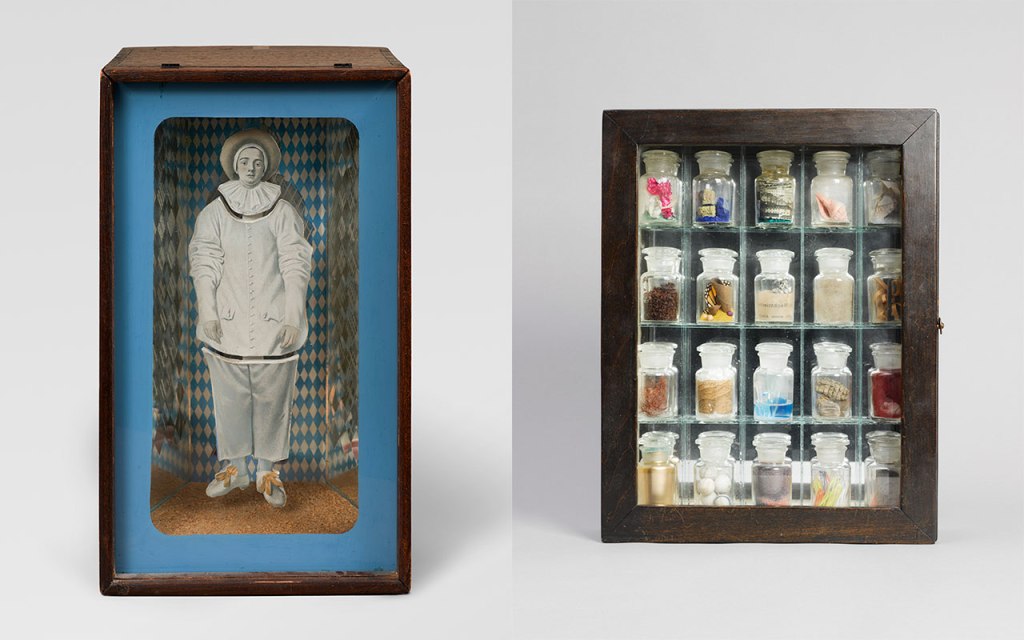
Images: 1- The House on Utopia Parkway: Joseph Cornell’s Studio Re-Created by Wes Anderson, 2025, installation view © 2025 The Joseph and Robert Cornell Memorial Foundation/Licensed by VAGA at Artists Rights Society (ARS), New York – Photo: Thomas Lannes – Courtesy Gagosian – 2&3 : Joseph Cornell A Dressing Room for Gille, 1939 – Glazed wooden box, wood panel cover, paint, mirror, cork, printed paper collage, cotton thread, textiles, ribbon tape15 x 8 5/8 x 6 3/4 inches (38.1 x 21.9 x 17 cm)
Richard L. Feigen Collection – © 2025 The Joseph and Robert Cornell Memorial Foundation/Licensed by VAGA at Artists Rights Society (ARS), New York – Photo: Owen Conway – Courtesy Gagosian / Joseph Cornell Pharmacy, 1943 – Glass-paned wood cabinet, marbled paper, mirror, glass shelves, and twenty glass bottles containing various paper cuttings (crêpe, tissue, printed engravings, and maps), colored sand, pigment, colored aluminum foil, feathers, paper butterfly wing, dried leaf, glass marble, fibers, driftwood, wood marbles, glass rods, beads, seashells, crystals, stone, wood shavings, sawdust, sulfate, copper, wire, fruit pits, paint, water, and cork 15 1/4 x 12 x 3 1/8 inches (38.7 x 30.5 x 7.9 cm) © 2025 The Joseph and Robert Cornell Memorial Foundation/Licensed by VAGA at Artists Rights Society (ARS), New York – Photo: Dominique Uldry – Courtesy Gagosian










 INFERNO