BERLIN ART WEEK, LE COLLECTIF COMME CONSTELLATION
« Quatre façons de penser le collectif : de Berlin à Pozzuoli » – chap.1 : Berlin, le collectif comme constellation
Berlin Art Week 2025 : le collectif comme constellation
La Berlin Art Week 2025 fédère musées, galeries et espaces indépendants, densifiant l’offre culturelle pendant cette semaine-là. Ce format repose sur la cohabitation plutôt que sur la cohérence : chaque lieu conserve sa singularité, mais l’ensemble dessine la cartographie d’un certain état de l’art actuel. Ici, la notion de « collectif » se déplace du côté du visiteur, invité à assembler lui-même les fragments d’un discours dispersé.
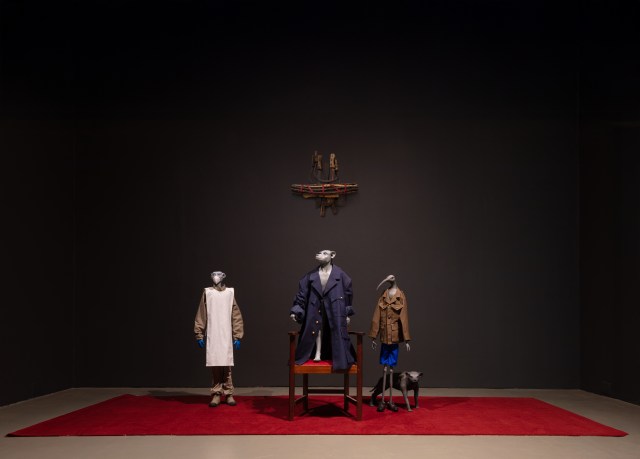
L’exposition Global Fascisms à la HKW (visible jusqu’au 7 décembre) interroge le fascisme comme phénomène historique et comme menace persistante. Elle voudrait examiner ses dynamiques esthétiques, sociales et politiques, mais c’est un vrai raté, une frustration, au regard de l’ambition hautement importante et pédagogique de l’idée de départ. Les liens entre les œuvres et la thématique choisie sont trop directs — mais nécessaires, notamment pour les œuvres de Maria Lassnig ou Hannah Höch — et parfois totalement éthérés : on pourrait y mettre tout l’art contemporain, en somme. Difficile de saisir quelle loupe ou quel miroir nous tend cette exposition.
L’exposition Petrit Halilaj. An Opera Out of Time, visible jusqu’au 31 mai 2026 au Hamburger Bahnhof, s’articule autour de son premier opéra, Syrigana, inspiré d’un village légendaire vieux de trois mille ans. L’opéra y est reconfiguré en une succession d’installations. Ce n’est plus une tentation d’art total : l’exposition en est l’illustration. Un opéra ne se fait pas seul — il implique orchestre, communauté, interprètes et lieu — et met ainsi en lumière le rôle du collectif dans les enjeux de reconstruction et de justice après-guerre. Grâce à la poésie enfantine d’Halilaj, nous sommes entraînés ailleurs, dans une pure exaltation lyrique.
L’exposition Magic Bullet d’Issy Wood au Schinkel Pavillon est ouverte jusqu’au 31 janvier 2026. Ses sujets sont peints dans des tonalités voilées : bruns profonds, bordeaux, verts sombres, roses poussiéreux, beiges cireux. Avec un réalisme au goût suranné, Issy Wood dresse le portrait d’objets et de fragments de corps devenus surréalistes par leurs cadrages et associations : une trame de dés sur un motif de muscles à vif, des figurines de porcelaine, un dentier devant un rameau d’olivier, un ensemble de vaisselle blanche à motifs d’oiseaux sur des branches, des mains en train d’être manucurées.
L’exposition Lygia Clark: Retrospective à la Neue Nationalgalerie est la première rétrospective complète de l’artiste en Allemagne. Elle réunit environ cent vingt œuvres — peintures, sculptures, objets, performances — couvrant sa production depuis la fin des années 1940 jusqu’à sa mort en 1988. Une partie importante de l’exposition est interactive : des répliques d’objets sont mises à disposition pour que les visiteurs puissent les manipuler, tandis que des performances complètent l’expérience. Soulignons que Lygia Clark parlait d’art relationnel dès les années 1960 — trente ans avant que le terme « esthétique relationnelle » ne soit formulé —, et qu’elle l’incarnait non par la théorie mais par la pratique : les matières qu’elle choisit, les objets qu’elle crée, la disposition de ceux-ci dans l’espace et le rôle qu’elle accorde au spectateur devenu activateur.
L’exposition la plus attendue par les amateurs d’art vidéo est celle de Mark Leckey, Enter Thru Medieval Wounds, à la Julia Stoschek Foundation (jusqu’au 3 mai 2026). Plus de quarante œuvres de Leckey y sont présentées, mêlant vidéos majeures des années 1999–2010 issues de la collection Julia Stoschek et œuvres plus récentes. L’ensemble couvre presque trois décennies de travail, montrant l’évolution de l’artiste, ses thèmes récurrents et ses ruptures : la culture rave britannique, le found footage, les nouvelles technologies envisagées comme des objets archaïques. Ces œuvres nous invitent à interroger la production des images d’aujourd’hui, à mieux les regarder et à comprendre leur multiplicité, leur virtualité et le sentiment de nostalgie qu’elles peuvent engendrer.
Timothée Chaillou, à Berlin
____________________________________
‘Four ways of thinking about the collective: from Berlin to Pozzuoli’
1 – Berlin Art Week 2025: The Collective as a Constellation
Berlin Art Week 2025 brings together museums, galleries, and independent spaces, enhancing the cultural offerings during this week. This format relies on coexistence rather than coherence: each venue retains its uniqueness, but the ensemble maps a certain state of current art. Here, the notion of « collective » shifts to the visitor, who is invited to assemble the fragments of a dispersed discourse themselves.
The Global Fascisms exhibition at the HKW (on view until December 7) examines fascism as a historical phenomenon and a persistent threat. It aims to examine its aesthetic, social, and political dynamics, but this is a real failure, a frustration, given the highly important and educational ambition of the original idea. The links between the works and the chosen theme are too direct—but necessary, especially for the works of Maria Lassnig or Hannah Höch—and sometimes completely ethereal: one could include all of contemporary art there, in short. It is difficult to grasp what magnifying glass or mirror this exhibition is holding up to us.
The exhibition Petrit Halilaj. An Opera Out of Time, on view until May 31, 2026 at the Hamburger Bahnhof, revolves around his first opera, Syrigana, inspired by a legendary 3,000-year-old village. The opera is reconfigured as a series of installations. It is no longer a temptation to achieve total art: the exhibition illustrates this. An opera is not made alone—it involves an orchestra, community, performers, and venue—and thus highlights the role of the collective in the challenges of post-war reconstruction and justice. Thanks to Halilaj’s childlike poetry, we are transported elsewhere, into pure lyrical exaltation.
Issy Wood’s Magic Bullet exhibition at the Schinkel Pavillon is open until January 31, 2026. Her subjects are painted in muted tones: deep browns, burgundy, dark greens, dusty pinks, waxy beiges. With an old-fashioned realism, Issy Wood portrays objects and body fragments that have become surreal through their framing and associations: a grid of dice on a pattern of raw muscles, porcelain figurines, a set of dentures in front of an olive branch, a set of white dishes with bird motifs on branches, hands being manicured.
The exhibition Lygia Clark: Retrospective at the Neue Nationalgalerie is the artist’s first comprehensive retrospective in Germany. It brings together approximately 120 works—paintings, sculptures, objects, and performances—covering her output from the late 1940s until her death in 1988. A significant portion of the exhibition is interactive: replicas of objects are made available for visitors to handle, while performances round out the experience. It is worth noting that Lygia Clark had been discussing relational art since the 1960s—30 years before the term « relational aesthetics » was coined—and that she embodied it not in theory but in practice: the materials she chose, the objects she created, their arrangement in space, and the role she assigned to the viewer as activator.
The most anticipated exhibition for video art enthusiasts is Mark Leckey’s Enter Thru Medieval Wounds at the Julia Stoschek Foundation (until May 3, 2026). Over forty of Leckey’s works are presented, combining major videos from 1999–2010 from the Julia Stoschek Collection with more recent works. The collection spans almost three decades of work, showing the artist’s evolution, recurring themes, and radical departures: British rave culture, found footage, and new technologies viewed as archaic objects. These works invite us to question the production of today’s images, to examine them more closely, and to understand their multiplicity, their virtuality, and the sense of nostalgia they can engender.
Timothée Chaillou, in Berlin

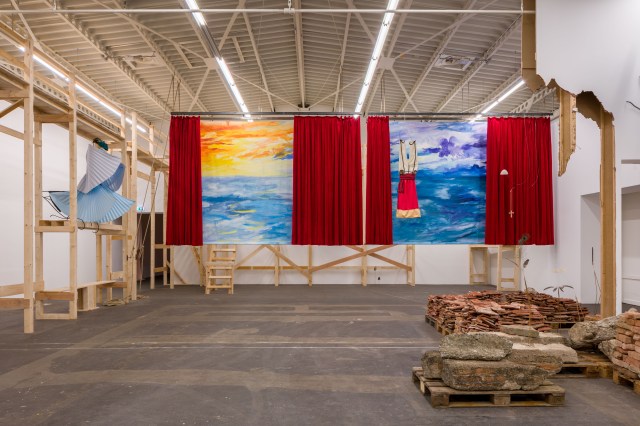
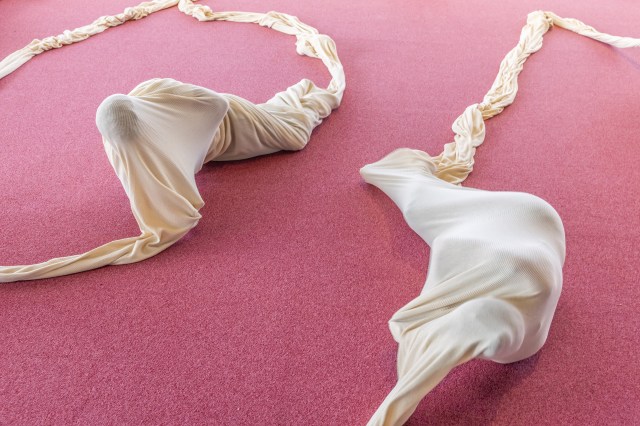
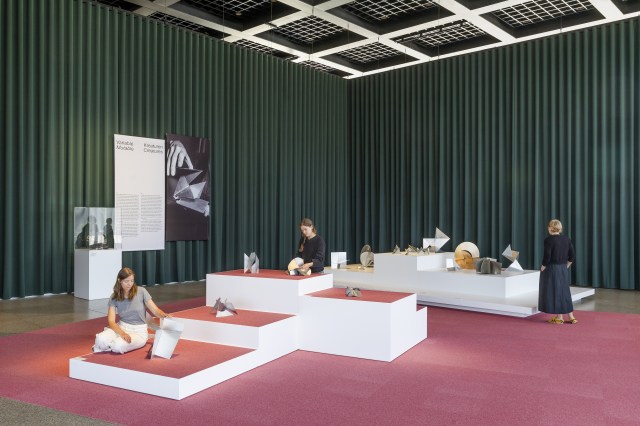
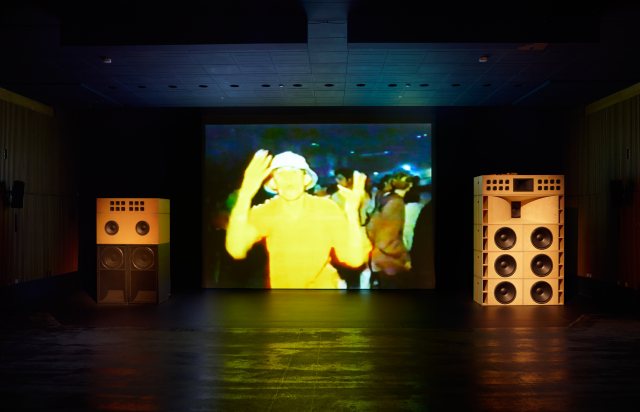
Images: Above: exhibition GLOBAL FASCISM – Jane Alexander, « Council with emblem » (2025) – 2 & 3: exhibition PETRIT HALIJAJ ‘An Opera Out of Time’, Hamburger Bahnhof – Nationalgalerie der Gegenwart, 11.9.2025 – 31.5.2026 © Petrit Halilaj, 2025 / Mennour, Paris, ChertLüdde, Berlin und kurimanzutto, New York und Mexiko-Stadt. Foto: Staatliche Museen zu Berlin, Nationalgalerie / Jacopo La Forgia – 4: exhibition LYGIA CLARK Lygia, Túnel, 1968, Ausstellungsansicht, Neue Nationalgalerie, 2025, © Neue Nationalgalerie – Stiftung Preußischer Kulturbesitz / David von Becker – 5: exhibition LYGIA CLARK. Retrospektive, Ausstellungsansicht, Neue Nationalgalerie, 2025, © Neue Nationalgalerie – Stiftung Preußischer Kulturbesitz / David von Becker – 6: exhibition MARK LECKEY: Enter thru medieval sounds, installation, JSF Berlin. Photo: Alwin Lay.









 INFERNO