GEORG BASELITZ, LES PIEDS DANS LES ETOILES
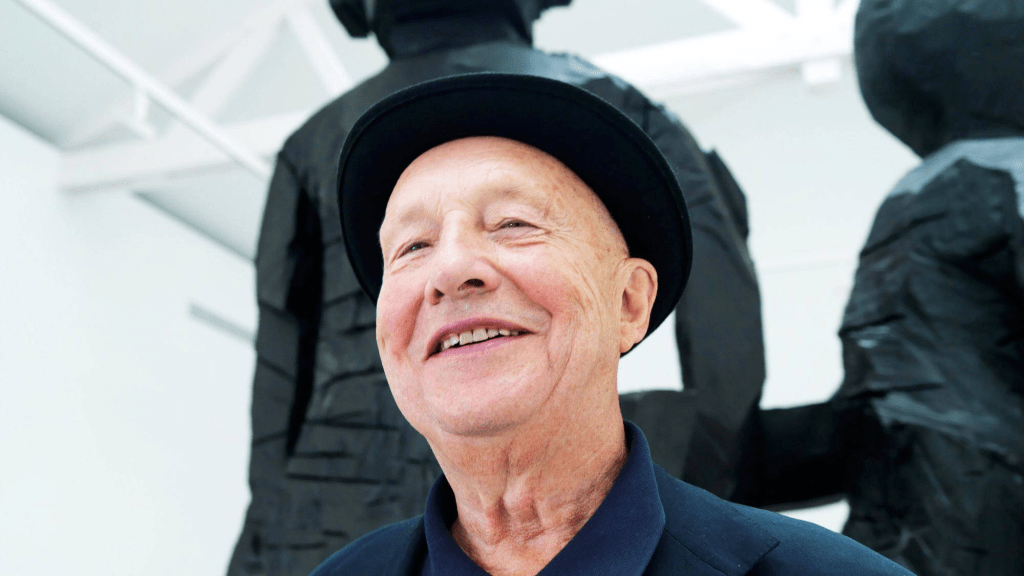
DISPARITION. LE PEINTRE ET SCULPTEUR ALLEMAND GEORG BASELITZ S’EST ETEINT CE 30 AVRIL
Le peintre et sculpteur Georg Baselitz est décédé ce 30 avril à l’âge de 88 ans. Reconnu pour ses innovations picturales -ses figures peintes tête en bas- ou ses sculptures à la tronçonneuse, le grand artiste allemand, né en RDA en 1936, demeurera un personnage iconique de l’Art de ces dernières décennies, ayant profondément marqué l’histoire de la peinture et révolutionné la sculpture et toutes les disciplines qu’il aura explorées. Un immense artiste dont la dernière exposition sera celle de la 61e Biennale de Venise à venir, intitulée « Eroi d’Oro », pour laquelle il a développé ce qui restera son dernier travail, et qui s’apprête à ouvrir ses portes le 6 mai prochain à la Fondazione Giorgio Cini, sur l’Isola San Giorgio Maggiore.
» J’ai commencé par des dessins et des peintures, un peu comme si je creusais, forais, écoutais aux portes, A L’ÂGE DE ruminais, explorais, réfléchissais, explorais les profondeurs de mon être, en pensant à ce qui se cache derrière ou en dessous. Et ainsi, transmuée en lignes et en formes, je me suis transportée de mon monde à un autre. » Georg Baselitz.
Depuis 1980, Georg Baselitz exerce une profonde influence sur l’art international et compte incontestablement parmi les artistes les plus importants de notre époque. Il a façonné une nouvelle identité pour l’art allemand dans la seconde moitié du XXe siècle ; en réaction au traumatisme et à la tragédie de la Seconde Guerre mondiale, il a développé un vocabulaire artistique puisant dans l’œuvre de ses prédécesseurs, tout en demeurant unique et profondément personnel. Depuis lors, Baselitz n’a cessé de renouveler sa pratique par des développements formels, s’inspirant souvent de l’histoire de l’art et de sa propre œuvre considérable pour approfondir ses thèmes centraux à travers un mode d’expression artistique en constante évolution, mais toujours singulier .
Depuis 1969, l’artiste peint ses compositions à l’envers. Pour Baselitz, ce format novateur était une manière de vider la forme de son contenu, de naviguer entre abstraction et figuration et de révolutionner un médium alors considéré comme irrémédiablement conventionnel. Sa méthode tactile directe, consistant à peindre avec les doigts dans les années 1970, a favorisé une utilisation plus libre de la couleur et des matériaux, qui s’est pleinement exprimée dans ses champs colorés expressionnistes des années 1980. Cette décennie a été déterminante pour l’artiste, notamment grâce à sa sélection pour représenter l’Allemagne à la Biennale de Venise de 1980 aux côtés d’Anselm Kiefer, marquant ainsi ses premiers pas dans la sculpture.
Le besoin constant d’innovation est une constante dans sa carrière, comme en témoignent les Remix Paintings qu’il crée depuis 2006 et qui réexaminent l’iconographie de ses œuvres passées. En revisitant ses propres motifs et en intégrant de subtiles références à l’histoire de l’art, Baselitz propose une réflexion sur la signification même de la peinture. Interrogé sur cette autoréférentialité, il a déclaré : « Je me repliais sans cesse sur moi-même, et tout ce que je fais est puisé à l’extérieur de moi. » Dans des œuvres récentes mettant en scène l’artiste et son épouse Elke, Baselitz explore la lutte de la représentation, l’inévitabilité de la subjectivité et la représentation de soi à travers l’autre. Il a également introduit une nouvelle technique dans des œuvres récentes réalisées par transfert, où la légèreté, l’audace et la vivacité des couleurs rendent hommage à Roy Lichtenstein.
Baselitz, qui collabore avec la galerie Ropac depuis plus de vingt ans, partage son temps entre trois lieux : le lac Ammersee en Bavière, Salzbourg et Imperia en Ligurie, en Italie. Au début de sa carrière, son travail a été présenté à la documenta 5 (1972) et 7 (1982). Après la Biennale de Venise de 1980, il a participé à une série d’expositions marquantes : « A New Spirit in Painting » (1981) et « German Art in the Twentieth Century » (1985) à la Royal Academy of Arts de Londres ; et « Zeitgeist » (1982) au Martin-Gropius-Bau de Berlin. Le Solomon R. Guggenheim Museum de New York a présenté sa première rétrospective d’envergure aux États-Unis en 1995, qui a ensuite été exposée au Los Angeles County Museum of Art, au Hirshhorn Museum de Washington et à la Nationalgalerie de Berlin. D’autres rétrospectives importantes ont été organisées par le Musée d’Art Moderne de Paris en 1996 et par la Royal Academy of Arts de Londres en 2007. En 2006 et 2007, la Pinakothek der Moderne de Munich et l’Albertina de Vienne ont été les premières à présenter son cycle Remix .
Une rétrospective des sculptures de Baselitz a été organisée au Musée d’Art Moderne de Paris (2011-2012) et sa série d’Avignon a été présentée à la Biennale de Venise en 2015. Ses Heldenbilder (Peintures de héros ) et Neue Typen (Nouveaux types) ont été exposés au Städel Museum de Francfort (2016), puis au Moderna Museet de Stockholm, au Palazzo delle Esposizioni de Rome et au Guggenheim de Bilbao. Pour célébrer son 80e anniversaire en 2018, d’importantes expositions personnelles lui ont été consacrées à la Fondation Beyeler de Bâle, au Hirshhorn Museum de Washington et au Musée Unterlinden de Colmar. En 2019, il a été élu à l’Académie des Beaux-Arts de Paris et est devenu le premier artiste vivant à bénéficier d’une exposition à la Gallerie dell’Accademia de Venise, suivie en 2021 par sa plus grande rétrospective à ce jour au Centre Pompidou à Paris.
BASELITZ A LA BIENNALE DE VENISE 2026 : https://inferno-magazine.com/2026/03/10/biennale-de-venise-de-lor-de-lor-georg-baselitz-montre-ses-eroi-doro-a-la-fondation-cini/
Sources: Galerie Thaddaeus Ropac, DR
___________________________________
DEATH. GERMAN PAINTER AND SCULPTOR GEORG BASELITZ PASSED AWAY ON APRIL 30TH
The painter and sculptor Georg Baselitz died on April 30th at the age of 88. Renowned for his pictorial innovations—his figures painted upside down—and his chainsaw sculptures, the great German artist, born in East Germany in 1936, will remain an iconic figure in the art of recent decades, having profoundly marked the history of painting and revolutionized sculpture and all the disciplines he explored. This immense artist’s final exhibition will be at the upcoming 61st Venice Biennale, entitled « Eroi d’Oro » (Golden Heroes), for which he developed what will be his last work, and which is set to open on May 6th at the Fondazione Giorgio Cini on the Isola San Giorgio Maggiore.
“ I began with drawings and paintings, a bit like digging, drilling, listening at doors, ruminating, exploring, reflecting, exploring the depths of my being, thinking about what lies behind or beneath. And so, transmuted into lines and forms, I transported myself from my world to another .” Georg Baselitz.
Since 1980, Georg Baselitz has exerted a profound influence on international art and is unquestionably among the most important artists of our time. He shaped a new identity for German art in the second half of the 20th century; in reaction to the trauma and tragedy of the Second World War, he developed an artistic vocabulary drawing on the work of his predecessors, while remaining unique and deeply personal. Since then, Baselitz has continually renewed his practice through formal developments, often drawing inspiration from art history and his own considerable body of work to further explore his central themes through an ever-evolving, yet always singular, mode of artistic expression.
Since 1969, the artist has painted his compositions upside down. For Baselitz, this innovative format was a way to empty form of its content, to navigate between abstraction and figuration, and to revolutionize a medium then considered irredeemably conventional. His direct, tactile method of painting with his fingers in the 1970s fostered a freer use of color and materials, which found its full expression in his expressionist color fields of the 1980s. This decade was pivotal for the artist, notably his selection to represent Germany at the 1980 Venice Biennale alongside Anselm Kiefer, marking his first foray into sculpture.
The constant need for innovation is a recurring theme in his career, as evidenced by the Remix Paintings he has created since 2006, which re-examine the iconography of his past works. By revisiting his own motifs and incorporating subtle references to art history, Baselitz offers a reflection on the very meaning of painting. When asked about this self-referentiality, he stated, « I was constantly turning inward, and everything I do is drawn from outside myself. » In recent works featuring the artist and his wife, Elke, Baselitz explores the struggle of representation, the inevitability of subjectivity, and the representation of the self through the other. He has also introduced a new technique in recent works created by transfer, where the lightness, boldness, and vibrancy of the colors pay homage to Roy Lichtenstein.
Baselitz, who has collaborated with the Ropac Gallery for over twenty years, divides his time between three locations: Lake Ammersee in Bavaria, Salzburg, and Imperia in Liguria, Italy. Early in his career, his work was presented at documenta 5 (1972) and 7 (1982). Following the 1980 Venice Biennale, he participated in a series of landmark exhibitions: « A New Spirit in Painting » (1981) and « German Art in the Twentieth Century » (1985) at the Royal Academy of Arts in London; and « Zeitgeist » (1982) at the Martin-Gropius-Bau in Berlin. The Solomon R. Guggenheim Museum in New York presented his first major retrospective in the United States in 1995, which subsequently traveled to the Los Angeles County Museum of Art, the Hirshhorn Museum in Washington, D.C., and the Nationalgalerie in Berlin. Other important retrospectives were organized by the Musée d’Art Moderne in Paris in 1996 and by the Royal Academy of Arts in London in 2007. In 2006 and 2007, the Pinakothek der Moderne in Munich and the Albertina in Vienna were the first to present his Remix cycle.
A retrospective of Baselitz’s sculptures was held at the Musée d’Art Moderne de Paris (2011–2012), and his Avignon series was presented at the Venice Biennale in 2015. His Heldenbilder (Hero Paintings) and Neue Typen (New Types) were exhibited at the Städel Museum in Frankfurt (2016), then at the Moderna Museet in Stockholm, the Palazzo delle Esposizioni in Rome, and the Guggenheim Museum in Bilbao. To celebrate his 80th birthday in 2018, major solo exhibitions were dedicated to him at the Fondation Beyeler in Basel, the Hirshhorn Museum in Washington, D.C., and the Musée Unterlinden in Colmar. In 2019, he was elected to the Academy of Fine Arts in Paris and became the first living artist to have an exhibition at the Gallerie dell’Accademia in Venice, followed in 2021 by his largest retrospective to date at the Centre Pompidou in Paris.
BASELITZ AT THE VENICE BIENNALE 2026: https://inferno-magazine.com/2026/03/10/biennale-de-venise-de-lor-de-lor-georg-baselitz-montre-ses-eroi-doro-a-la-fondation-cini/
Sources: Galerie Thaddaeus Ropac, DR
__________________________________
LATEST EXHIBITIONS:
2026
Time for new heroes , Derneburg Castle Art Museum, Holle, Germany
Georg Baselitz: Back Again , White Cube Bermondsey, London, United Kingdom
Georg Baselitz: Golden Heroes , Giorgio Cini Foundation, Venice, Italy
BASELITZ MANIFESTO , Rupertinum, Salzburg, Austria
BASELITZ NOW , Museum of Modern Art, Salzburg, Austria
Georg Baselitz: History , Cristea Roberts Gallery, London, United Kingdom
Georg Baselitz – Avanti!, Musée Novecento, Florence, Italy
Georg Baselitz , Seemannskirche Prerow, Prerow, Germany
2025
Georg Baselitz: A Life in Print , Kode Art Museum, Bergen, Norway
Georg Baselitz & Lucio Fontana: L’aurora viene , Thaddaeus Ropac, Milan, Italy
Georg Baselitz: Original figures for Igor Stravinsky’s ‘Histoire du Soldat’ , Festspielhaus, Salzburg, Austria
Georg Baselitz: First Feet , Munch Museum, Sørenga, Norway
Georg Baselitz: Paintings 2014-2025. Something Everywhere , Bilbao Fine Arts Museum, Bilbao, Spain
A Leg by Manet in Paris , Thaddaeus Ropac, Paris Marais, France
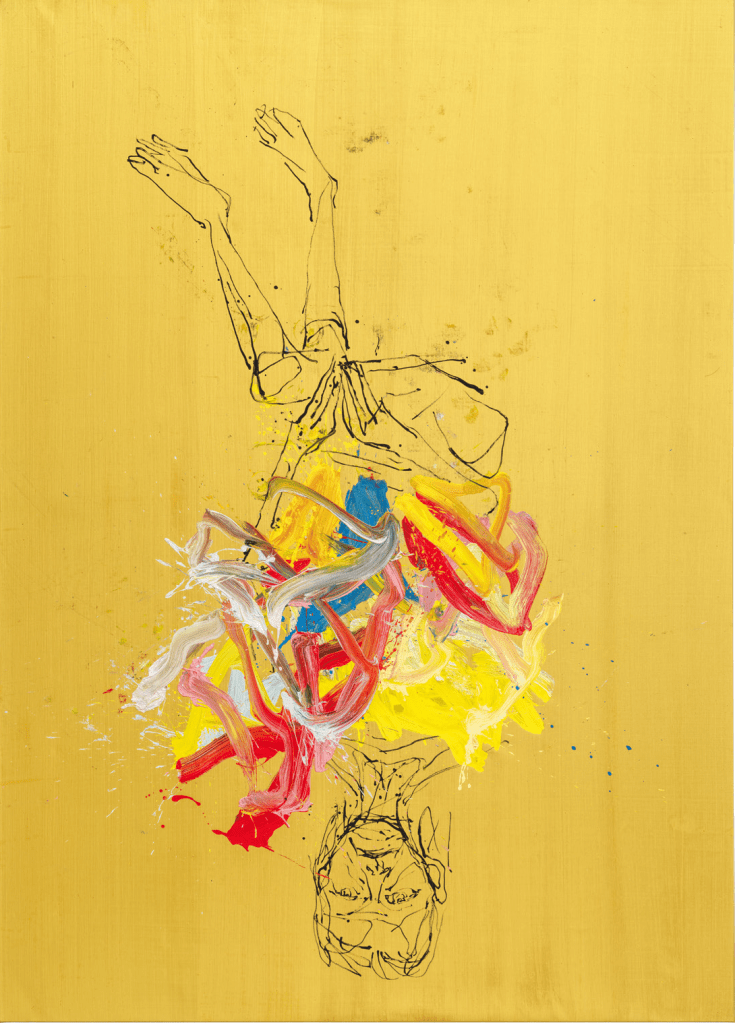
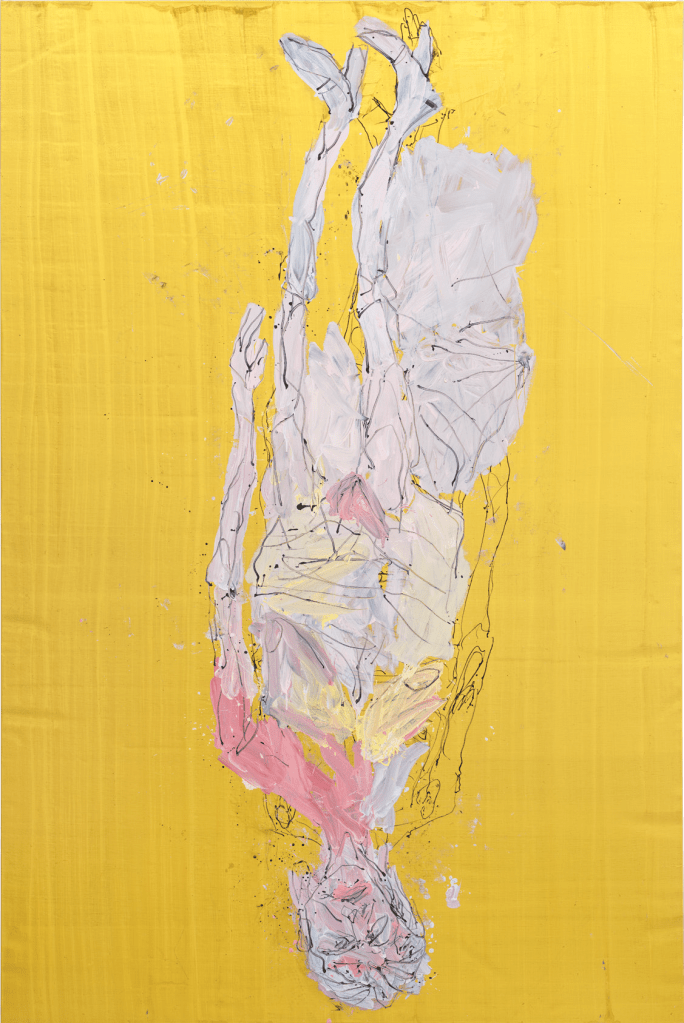
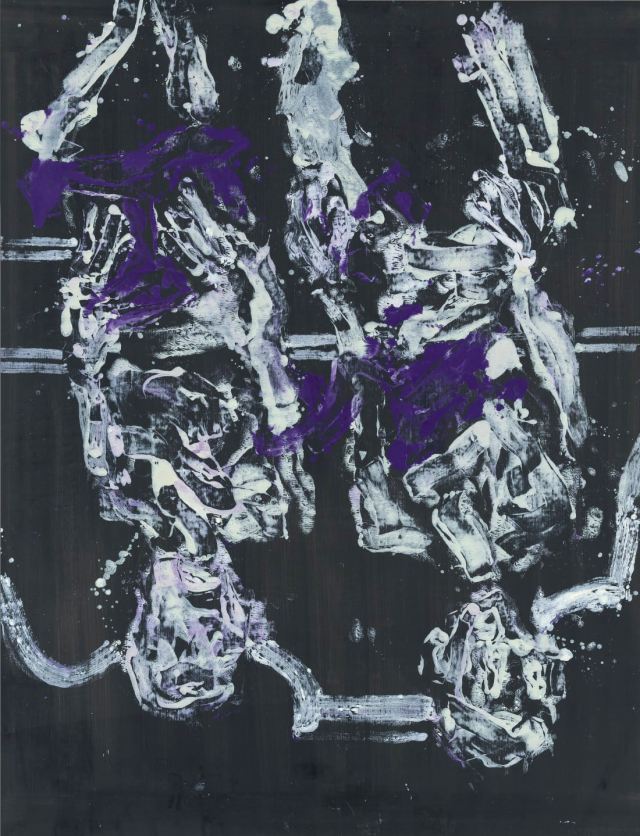
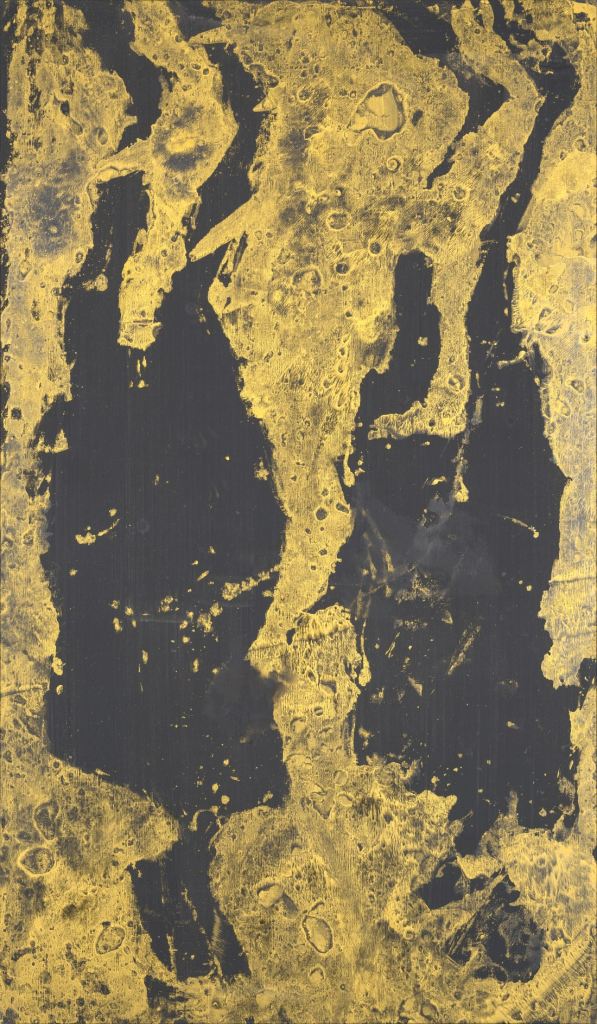
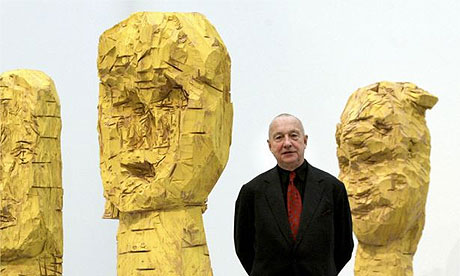

Images: 1- Georg Baselitz en 2014, photo Christophe Beauregard – 2&3 « Eroi d’Oro » l’exposition à la Fondation Cini àVenise 2026 : Die goldene Kittelschürze, 2025, oil and gold on canvas. 300 × 215 cm. © Georg Baselitz 2026. Photo : Stefan Altenberger – Courtesy Thaddaeus Ropac Gallery – 3- Georg Baselitz – Xray lila – 2020 – 4-Georg Bzselitz – Die reihen – 2020 – copyright the artist – Thaddaeus Ropac Gallery – 5- Georg Baselitz devant ses sculptures à la tronçonneuse en 2011, Photo Kirsten Neumann – 6- « Volk Ding Zero » (2009) de Georg Baselitz à côté du « Penseur » (1904) de Rodin. Siegfried Forster – all images copyright Georg Baselitz and Thaddaeus Ropac Galleries.