AVEC « NIGHT », MAURIZIO CATTELAN DÉPLOIE SES OEUVRES HISTORIQUES À BERLIN POUR LA PREMIÈRE FOIS
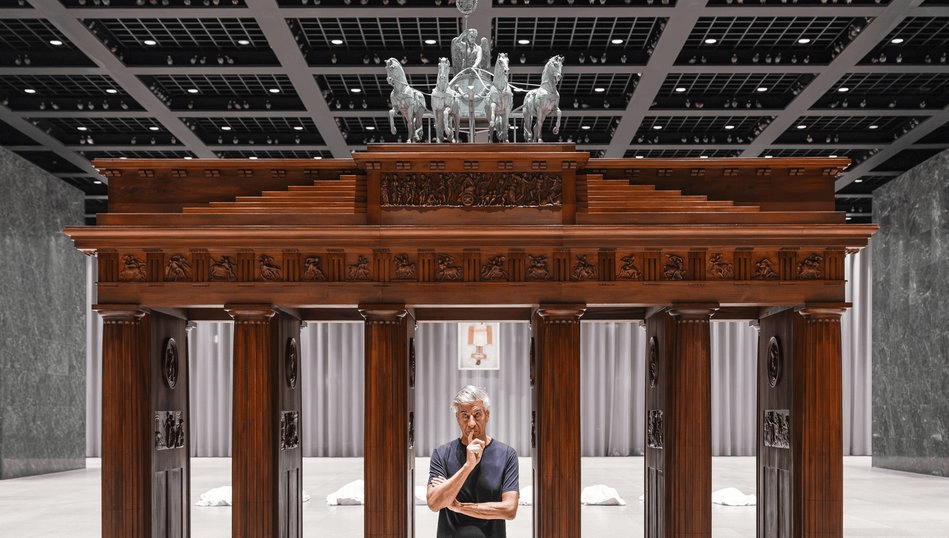
MAURIZIO CATTELAN « NIGHT » – Neue Nationalgalerie Berlin – Jusqu’au 7 mars 2027.
Avec «NIGHT », , la Neue Nationalgalerie présente la première grande exposition individuelle de l’artiste italien Maurizio Cattelan en Allemagne. L’exposition s’inscrit dans le cadre du Prix de la Galerie nationale 2026, pour lequel Maurizio Cattelan a été sélectionné par un jury international. Elle rassemble des œuvres historiques majeures de Cattelan ainsi que des œuvres récentes dans le bâtiment emblématique de Mies van der Rohe.
L’exposition rassemble des œuvres phares telles que « Him » (2001), « Novecento » (1997), « La Rivoluzione Siamo Noi » (2000) et « Untitled » (2003), inspiré du roman « Le Tambour » de Günter Grass, avec de nouvelles œuvres. Ensemble, elles abordent des thèmes centraux de l’œuvre de Cattelan : la frontière fragile entre l’innocence et la violence, la construction de l’identité ainsi que la présence constante de la mémoire historique.
Au cœur de l’exposition se trouve une installation in situ spécialement conçue pour la Neue Nationalgalerie. Avec cette nouvelle commande, Cattelan intervient délicatement dans l’agencement spatial du lieu, modifiant ainsi la manière dont le bâtiment est utilisé et vécu, et ouvrant la voie à de nouvelles formes de rencontre. Les formes d’exposition habituelles s’effacent au profit d’une présentation marquée par l’attention, la réflexion et l’expérience partagée. Cela modifie les relations entre l’œuvre, le public et l’architecture.
La Neue Nationalgalerie de Berlin, conçue par Mies van der Rohe, constitue à cet égard un espace de résonance particulier. Son architecture emblématique ne se contente pas d’être un lieu d’exposition, mais devient elle-même un élément actif de la mise en scène et influence de manière déterminante la perception et l’expérience des œuvres présentées.
Présentée à Berlin, l’exposition « NIGHT » se déploie dans un contexte allemand marqué par des expériences historiques complexes et des processus de mémoire permanents. Alors que les récits sociaux sont sans cesse remis en question au fil des générations, l’œuvre de Cattelan s’inscrit dans un champ de tensions où les images, les symboles et les formes de représentation continuent d’être activement négociés.
Depuis le début des années 1990, Maurizio Cattelan (né en 1960 à Padoue) compte parmi les figures marquantes de l’art contemporain international. Ses œuvres reprennent des images familières, profondément ancrées dans la mémoire collective, et en modifient le sens par des interventions minimales, souvent déstabilisantes. Ce faisant, Cattelan aborde des thèmes particulièrement chargés sur le plan social, historique ou émotionnel : la religion, l’enfance, l’autorité et les traumatismes collectifs intergénérationnels.
À travers un langage visuel oscillant entre ironie, provocation, exagération et réduction formelle, il remet en question les récits établis et ouvre de nouvelles perspectives sur la mémoire, la foi et les structures de pouvoir sociales. Avec « NIGHT », Maurizio Cattelan revient à Berlin – vingt ans après avoir co-organisé la 4e Biennale de Berlin.
Commissariat : L’exposition est organisée par Lisa Botti, conservatrice à la Neue Nationalgalerie, en collaboration avec Klaus Biesenbach, directeur de la Neue Nationalgalerie, et en étroite collaboration avec Maurizio Cattelan.
_______________
Conversation avec Maurizio Cattelan (extrait)
Lisa Botti, conservatrice à la Neue Nationalgalerie et commissaire générale de l’exposition, en entretien avec l’artiste pour le magazine Quarterly de la galerie Gagossian. Extrait de l’entretien :
Lisa Botti : (…) La Neue Nationalgalerie est un bâtiment chargé d’histoire et d’une grande importance architecturale — quelle a été votre première réaction lorsque vous avez commencé à réfléchir à travailler avec cet espace précis ?
Maurizio Cattelan : Chaque espace d’exposition représente un défi, mais la Neue Nationalgalerie est particulièrement singulière, car le bâtiment lui-même s’apparente à une œuvre d’art. Mies van der Rohe y a réalisé une prouesse architecturale extraordinaire : un espace quasiment sans hiérarchie, sans début ni fin clairement définis, et sans véritable distinction entre intérieur et extérieur. Les parois de verre estompent la frontière entre le musée et la ville. C’est, à bien des égards, l’idée même d’un musée sans frontières. Parallèlement, cette ouverture radicale peut constituer un défi pour les artistes. La plupart des expositions s’appuient sur des murs, des enchaînements, des seuils et des divisions – précisément les éléments que Mies a cherché à éliminer. La question n’était donc pas de savoir comment occuper l’espace, mais comment lui insuffler un rythme sans trahir son ouverture. Plutôt que de rivaliser avec l’architecture, j’ai d’abord cherché à en comprendre la logique. Travailler à la Neue Nationalgalerie, c’est accepter que le bâtiment ne soit jamais un simple contenant : il est toujours un acteur à part entière de l’exposition.(…)
LB : Le bâtiment de Mies a été qualifié de temple. Avec NIGHT , cherchez-vous à exploiter cette idée ou à la contester ?
MC : Je ne dirais pas que je m’oppose à l’idée de temple. La Neue Nationalgalerie possède déjà une dimension rituelle : son échelle, sa symétrie, son silence et sa distance par rapport au quotidien. Je souhaitais explorer sérieusement cette dimension, sans pour autant la religiosité. J’ai imaginé l’espace presque comme une église contemporaine : une nef centrale, des bas-côtés et une succession de présences. Cette structure permet de structurer un bâtiment par ailleurs ouvert et non hiérarchisé. NIGHT n’est pas une œuvre sur la foi ; elle explore le doute, la suspension et le moment où les certitudes commencent à s’estomper. Le temple est là, mais il est instable. C’est un lieu où la croyance a laissé place aux interrogations.
LB : Pourquoi précisément le mot « nuit » ? Qu’est-ce qu’il vous apporte de plus que les mots « obscurité » ou « ombre » ?
MC : La nuit n’est pas simplement l’absence de lumière, c’est un état. L’obscurité est visuelle ; la nuit est psychologique. Une ombre appartient à un objet ; la nuit appartient à tous. Les choses les plus importantes de la vie se produisent aussi la nuit : la naissance, la mort, les rêves, la peur, le désir, l’amour et la solitude. La nuit suspend les certitudes. Les choses ne disparaissent pas nécessairement, elles deviennent simplement plus difficiles à cerner. L’exposition ne porte pas sur l’obscurité, mais sur la perte de certitude. La nuit est aussi éphémère : elle porte toujours en elle la possibilité du matin, même si on ne le voit pas encore.
LB : Qu’est-ce qui a inspiré le nouveau Purgatoire ?
MC : Le Purgatoire est né de l’architecture même de la Neue Nationalgalerie. En imaginant le bâtiment comme une église contemporaine, j’ai compris que l’exposition nécessitait également sa propre entrée. Le musée en possède déjà une ; il me fallait inventer celle de l’exposition. En ce sens, le Purgatoire crée un espace au sein d’un autre. Il introduit un seuil dans un bâtiment qui, délibérément, se refuse à toute frontière nette. La porte de Brandebourg m’a semblé une image de départ idéale : l’un des symboles les plus forts de l’Allemagne, mais aussi un symbole dont la signification a constamment évolué au fil de l’histoire. En réduisant son échelle et en la répétant, le monument perd de son caractère monumental. Il devient plus accessible, presque familier, sans pour autant perdre sa force symbolique. Nombre de mes œuvres fonctionnent ainsi : elles atténuent l’autorité sans en simplifier la complexité. Le Purgatoire n’est ni condamnation ni salut ; c’est un état de suspension, un lieu où la transformation demeure possible.
Interview parue dans le numéro d’hiver 2026 de Quarterly, Gagossian
Lisa Botti est conservatrice à la Neue Nationalgalerie de Berlin, où elle conçoit des expositions, des performances et des projets interdisciplinaires autour de l’art contemporain. En 2026, elle a été la commissaire de l’exposition « Maurizio Cattelan : NIGHT » , la première grande exposition personnelle de l’artiste en Allemagne.
Maurizio Cattelan est un comptable raté qui tue le temps en faisant de l’art.
___________________
MAURIZIO CATTELAN « NIGHT » – Neue Nationalgalerie Berlin – Until March 7, 2027.
With « NIGHT , » the Neue Nationalgalerie presents the first major solo exhibition in Germany by the Italian artist Maurizio Cattelan. The exhibition is part of the 2026 National Gallery Prize, for which Cattelan was selected by an international jury. It brings together major historical works by Cattelan as well as recent pieces in the iconic Mies van der Rohe building.
The exhibition brings together key works such as « Him » (2001), « Novecento » (1997), « La Rivoluzione Siamo Noi » (2000), and « Untitled » (2003), inspired by Günter Grass’s novel « The Tin Drum, » along with new works. Together, they explore central themes in Cattelan’s oeuvre: the fragile boundary between innocence and violence, the construction of identity, and the constant presence of historical memory.
At the heart of the exhibition is a site-specific installation created specifically for the Neue Nationalgalerie. With this new commission, Cattelan subtly intervenes in the spatial arrangement of the space, thereby altering how the building is used and experienced, and paving the way for new forms of encounter. Conventional exhibition formats give way to a presentation characterized by attentiveness, reflection, and shared experience. This transforms the relationships between the artwork, the public, and the architecture.
The Neue Nationalgalerie in Berlin, designed by Mies van der Rohe, is a particularly resonant space in this respect. Its iconic architecture is not merely an exhibition space, but itself becomes an active element in the staging and decisively influences the perception and experience of the works on display.
Presented in Berlin, the exhibition « NIGHT » unfolds within a German context marked by complex historical experiences and ongoing processes of memory. As social narratives are constantly challenged across generations, Cattelan’s work operates within a field of tensions where images, symbols, and forms of representation continue to be actively negotiated.
Since the early 1990s, Maurizio Cattelan (born in 1960 in Padua) has been a leading figure in international contemporary art. His works take familiar images, deeply rooted in collective memory, and alter their meaning through minimal, often unsettling interventions. In doing so, Cattelan addresses themes that are particularly charged on a social, historical, or emotional level: religion, childhood, authority, and intergenerational collective traumas.
Through a visual language oscillating between irony, provocation, exaggeration, and formal reduction, he challenges established narratives and opens new perspectives on memory, faith, and social power structures. With « NIGHT, » Maurizio Cattelan returns to Berlin—twenty years after co-organizing the 4th Berlin Biennale.
Curatorship: The exhibition is organized by Lisa Botti, curator at the Neue Nationalgalerie, in collaboration with Klaus Biesenbach, director of the Neue Nationalgalerie, and in close collaboration with Maurizio Cattelan.
_______________
Conversation with Maurizio Cattelan (excerpt)
Lisa Botti , curator at the Neue Nationalgalerie and general curator of the exhibition, in an interview with the artist for Gagossian Gallery’s Quarterly magazine. Excerpt from the interview:
Lisa Botti: (…) The Neue Nationalgalerie is a building steeped in history and of great architectural importance — what was your first reaction when you started thinking about working with this particular space?
Maurizio Cattelan: Every exhibition space presents a challenge, but the Neue Nationalgalerie is particularly unique because the building itself is akin to a work of art. Mies van der Rohe achieved an extraordinary architectural feat there: a space virtually without hierarchy, without a clearly defined beginning or end, and without a true distinction between inside and outside. The glass walls blur the boundary between the museum and the city. It is, in many ways, the very idea of a museum without borders. At the same time, this radical openness can pose a challenge for artists. Most exhibitions rely on walls, sequences, thresholds, and divisions—precisely the elements Mies sought to eliminate. The question, therefore, was not how to occupy the space, but how to infuse it with rhythm without betraying its openness. Rather than competing with the architecture, I first sought to understand its logic. Working at the Neue Nationalgalerie means accepting that the building is never a mere container: it is always an integral part of the exhibition. (…)
LB: Mies van der Rohe’s building has been called a temple. With NIGHT, are you trying to exploit this idea or challenge it?
MC: I wouldn’t say I’m opposed to the idea of a temple. The Neue Nationalgalerie already possesses a ritualistic dimension: its scale, its symmetry, its silence, and its distance from everyday life. I wanted to seriously explore this dimension, without necessarily being religious. I imagined the space almost like a contemporary church: a central nave, side aisles, and a succession of presences. This structure helps to organize a building that is otherwise open and non-hierarchical. NIGHT is not a work about faith; it explores doubt, suspension, and the moment when certainties begin to fade. The temple is there, but it is unstable. It is a place where belief has given way to questioning.
LB: Why specifically the word « night »? What does it offer you that the words « darkness » or « shadow » don’t?
MC : Night isn’t simply the absence of light; it’s a state. Darkness is visual; night is psychological. A shadow belongs to an object; night belongs to everyone. The most important things in life also happen at night: birth, death, dreams, fear, desire, love, and loneliness. Night suspends certainties. Things don’t necessarily disappear; they simply become more difficult to grasp. The exhibition isn’t about darkness, but about the loss of certainty. Night is also ephemeral: it always carries within it the possibility of morning, even if we don’t yet see it.
LB: What inspired the new « Purgatory » ?
MC: Purgatory was born from the very architecture of the Neue Nationalgalerie. By imagining the building as a contemporary church, I realized that the exhibition also needed its own entrance. The museum already has one; I had to invent the exhibition’s entrance. In this sense, Purgatory creates a space within another. It introduces a threshold into a building that deliberately rejects any clear boundary. The Brandenburg Gate seemed to me an ideal starting point: one of Germany’s strongest symbols, but also a symbol whose meaning has constantly evolved throughout history. By reducing its scale and repeating it, the monument loses its monumental character. It becomes more accessible, almost familiar, without losing its symbolic power. Many of my works function in this way: they soften authority without simplifying its complexity. Purgatory is neither condemnation nor salvation; it is a state of suspension, a place where transformation remains possible.
Interview published in the Winter 2026 issue of Quarterly, Gagossian
Lisa Botti is a curator at the Neue Nationalgalerie in Berlin, where she designs exhibitions, performances, and interdisciplinary projects around contemporary art. In 2026, she curated the exhibition « Maurizio Cattelan: NIGHT , » the artist’s first major solo exhibition in Germany.
Maurizio Cattelan is a failed accountant who kills time by making art.
___________________
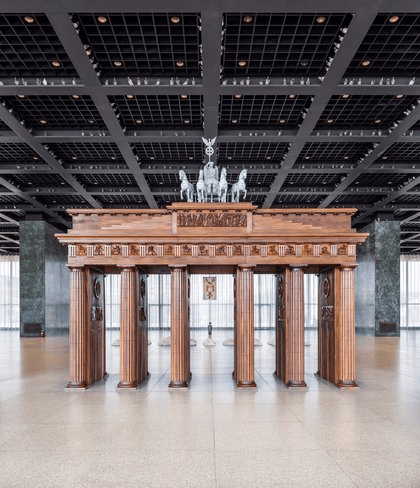
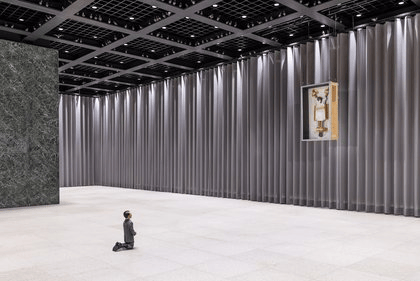
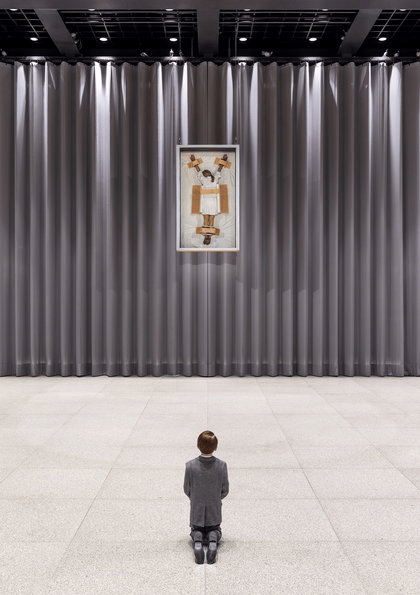
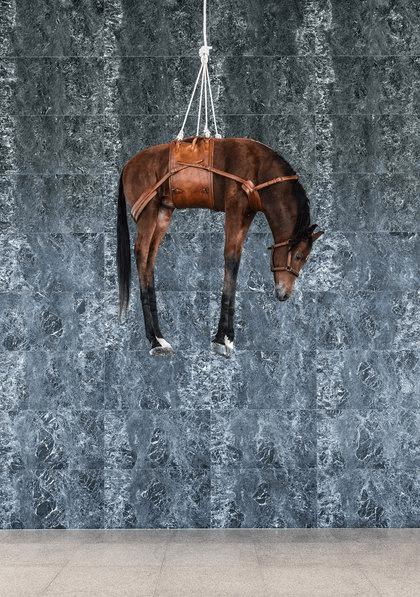
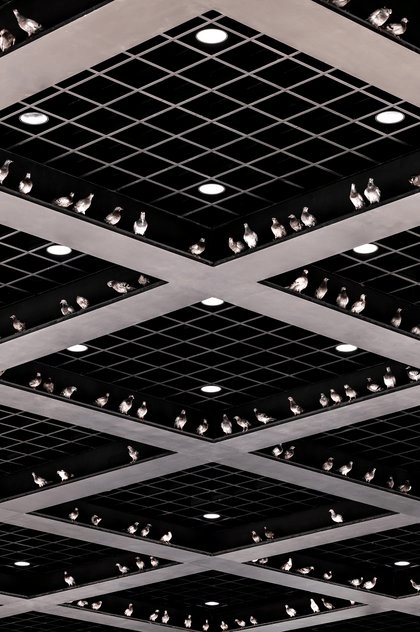
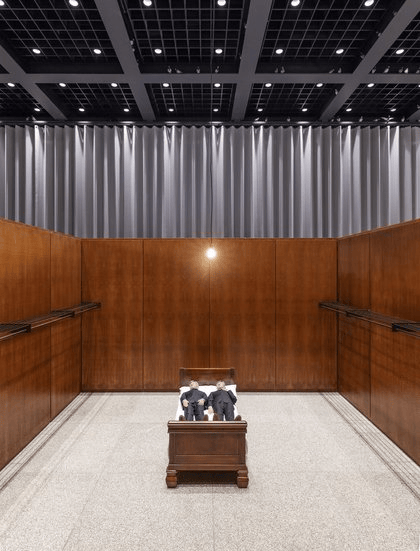
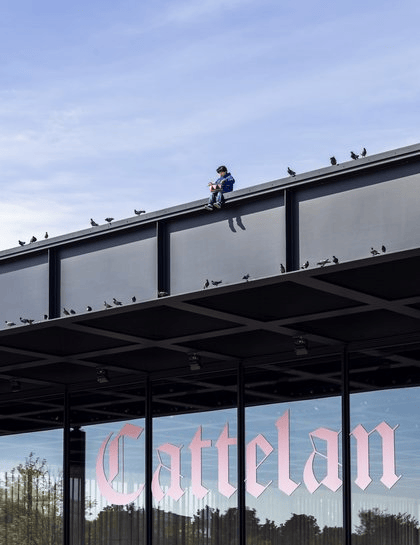
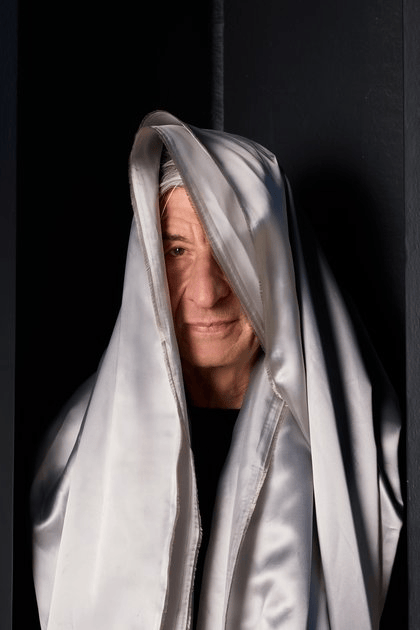
Images: MAURIZIO CATTELAN. NIGHT, exhibition views, Neue Nationalgalerie, 2026 © Neue Nationalgalerie – Stiftung Preußischer Kulturbesitz / ^photos David von Becker – 1- Maurizio Cattelan devant Purgatoire, 2026 – 2- Maurizio Cattelan, Purgatoire, 2026, vue d’installation – 3 & 4 – vues d’installation, Maurizio Cattelan : NIGHT, Neue Nationalgalerie, Berlin, – 5 & 6- Maurizio Cattelan, Novecento , 1997, vue d’installation – 7- Maurizio Cattelan, Never, 2003, vue d’installation – 8- Maurizio Cattelan, 2026 © Neue Nationalgalerie – Stiftung Preußischer Kulturbesitz / photo Ivan Erofeev – © Maurizio Cattelan 2026/2027 & Neue Nationalgalerie 2026/2027 – Courtesy Gagosian 2026