61e BIENNALE DE VENISE. LE PAVILLON INDIEN ET SES GÉOGRAPHIES DE LA DISTANCE : UN RETOUR CHEZ SOI ORCHESTRÉ PAR AMIN JAFFER
61e BIENNALE DE VENISE. « Geographies of Distance: remembering home », Pavillon de l’Inde, Arsenale, Venezia Commissariat de Artistes : Alwar Balasubramaniam (Bala), Sumakshi Singh, Ranjani Shettar, Asim Waqif et Skarma Sonam Tashi – 9 mai 22 novembre 2026.
L’Inde fait un retour remarqué sur la scène artistique contemporaine la plus prestigieuse du monde avec « Géographies de la distance : se souvenir de chez soi », marquant ainsi sa première participation à la Biennale de Venise depuis sept ans.
Présenté par le ministère de la Culture du gouvernement indien et conçu par le Dr Amin Jaffer, le pavillon indien de la 61e Exposition internationale d’art de la Biennale de Venise reflète la profondeur culturelle, la vitalité créative et l’identité en évolution de l’Inde contemporaine.
Présentant les œuvres de cinq artistes indiens de renom – Alwar Balasubramaniam (Bala), Sumakshi Singh, Ranjani Shettar, Asim Waqif et Skarma Sonam Tashi – l’exposition explore la notion de « chez-soi » comme un mélange de mémoire, de matériel et d’émotion, au sein d’une nation en pleine mutation, marquée par l’essor urbain, la mobilité et une diaspora mondiale dynamique, révélant la richesse culturelle d’une nation en pleine expansion économique, forte d’une diaspora mondiale dynamique.
Les cinq artistes indiens participants puisent dans les traditions de la culture matérielle millénaires pour susciter un lien émotionnel avec l’idée de foyer. Malgré leurs origines géographiques, leurs expériences et leurs pratiques différentes, ils partagent tous l’utilisation de matériaux organiques traditionnels indiens dans la création et la présentation de leurs œuvres.
« Géographies de la distance : Se souvenir du foyer » explore comment, pour celles et ceux dont la vie est marquée par le changement ou l’éloignement, le foyer devient moins un lieu fixe qu’une réalité nomade : à la fois souvenir, objet, rituel et mythologie personnelle. L’exposition reflète une période de mutations accélérées en Inde, où les villes s’étendent horizontalement et verticalement, transformant les quartiers à un rythme sans précédent. Les Indiens sont aujourd’hui plus mobiles que jamais, tant au sein d’un pays en plein essor économique qu’en tant que diaspora mondiale visible et engagée. Représentant près de 20 % de la population mondiale, les Indiens restent profondément attachés à leurs origines et à leur culture. Face à la transformation et au renouvellement d’espaces physiques autrefois familiers, nous sommes invités à nous interroger : le foyer est-il un lieu ou une évocation d’émotions et de souvenirs ?
___________________________
61st VENICE BIENNALE. “Geographies of Distance: remembering home”, India Pavilion, Arsenale, Venice Artists Commission: Alwar Balasubramaniam (Bala), Sumakshi Singh, Ranjani Shettar, Asim Waqif and Skarma Sonam Tashi – 9 May 22 November 2026.
India makes a remarkable return to the world’s most prestigious contemporary art scene with « Geographies of Distance: Remembering Home », marking its first participation in the Venice Biennale in seven years.
Presented by the Indian government’s Ministry of Culture and designed by Dr. Amin Jaffer, the Indian Pavilion at the 61st Venice Biennale International Art Exhibition reflects the cultural depth, creative vitality and evolving identity of contemporary India.
Featuring the works of five renowned Indian artists – Alwar Balasubramaniam (Bala), Sumakshi Singh, Ranjani Shettar, Asim Waqif and Skarma Sonam Tashi – the exhibition explores the notion of ‘home’ as a blend of memory, material and emotional, within a nation undergoing rapid change, marked by urban growth, mobility and a dynamic global diaspora, revealing the cultural richness of a nation experiencing rapid economic expansion, bolstered by a vibrant global diaspora.
The five participating Indian artists draw upon millennia-old material culture traditions to evoke an emotional connection with the idea of home. Despite their different geographical origins, experiences, and practices, they all share the use of traditional Indian organic materials in the creation and presentation of their works.
“Geographies of Distance: Remembering Home” explores how, for those whose lives are marked by change or remoteness, home becomes less a fixed place than a nomadic reality: simultaneously a memory, an object, a ritual, and a personal mythology. The exhibition reflects a period of accelerated change in India, where cities are expanding horizontally and vertically, transforming neighborhoods at an unprecedented pace. Indians are now more mobile than ever, both within a rapidly growing economy and as a visible and engaged global diaspora. Representing nearly 20% of the world’s population, Indians remain deeply attached to their origins and culture. Faced with the transformation and renewal of once-familiar physical spaces, we are invited to ask ourselves: is home a place or an evocation of emotions and memories?
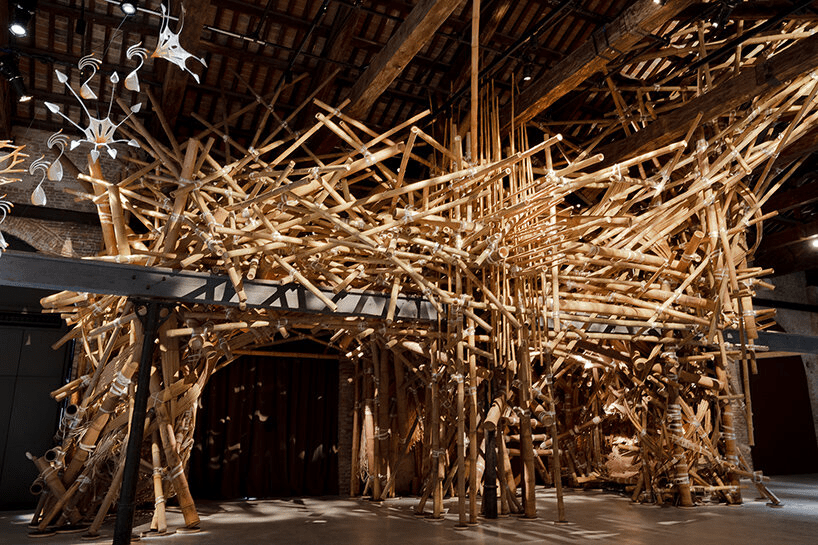
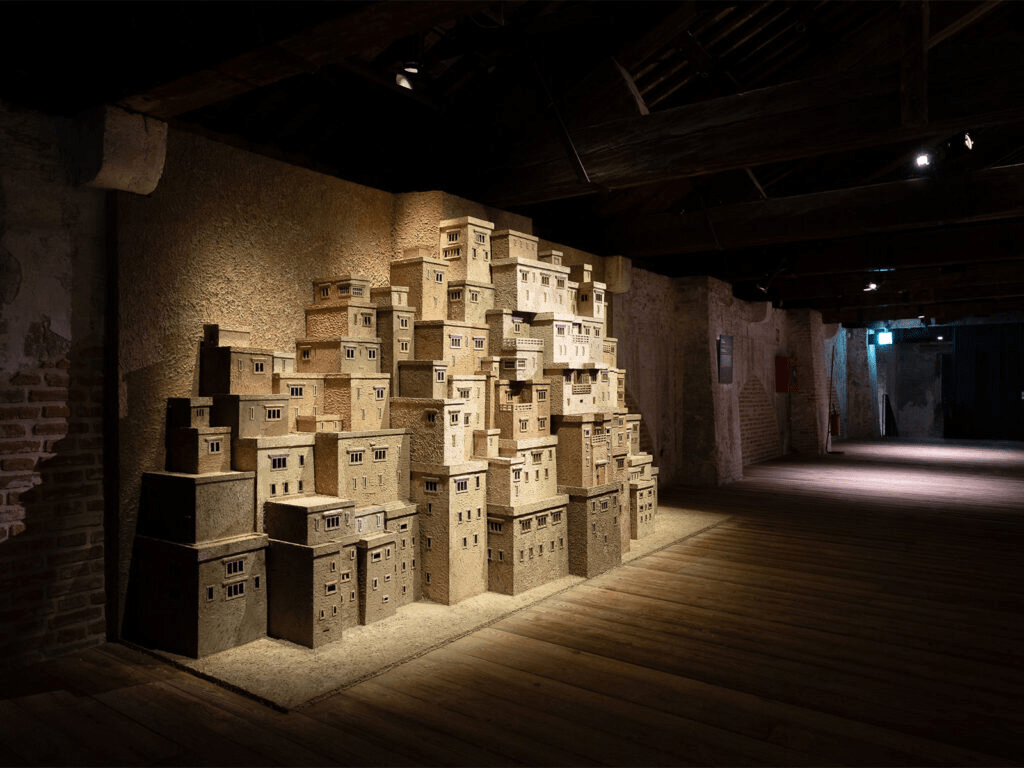
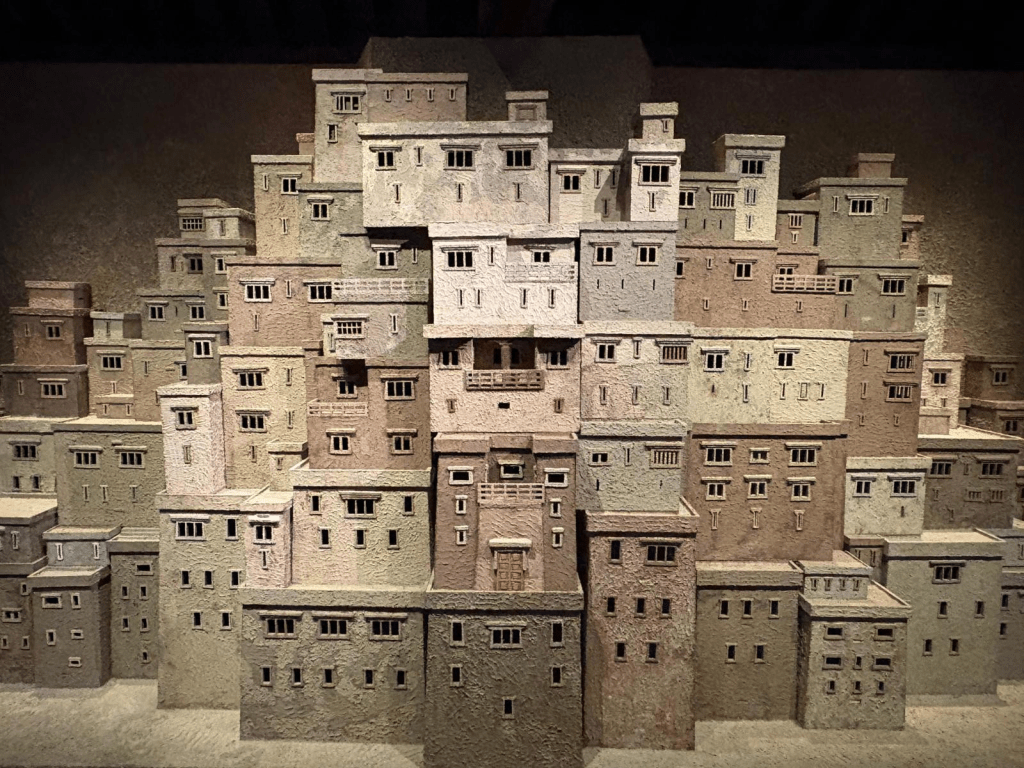
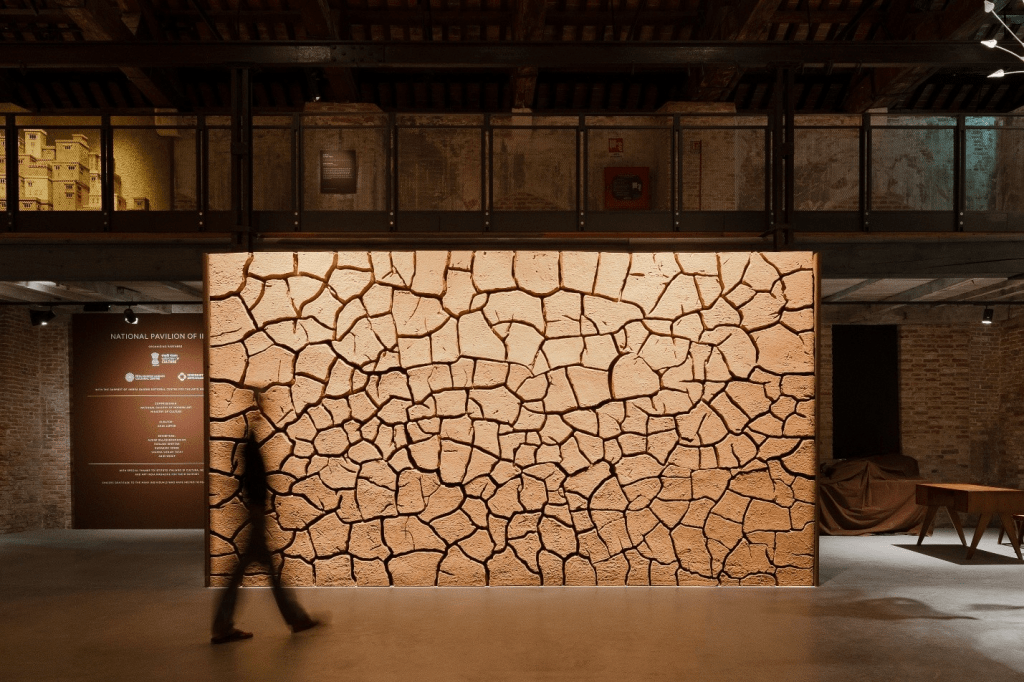
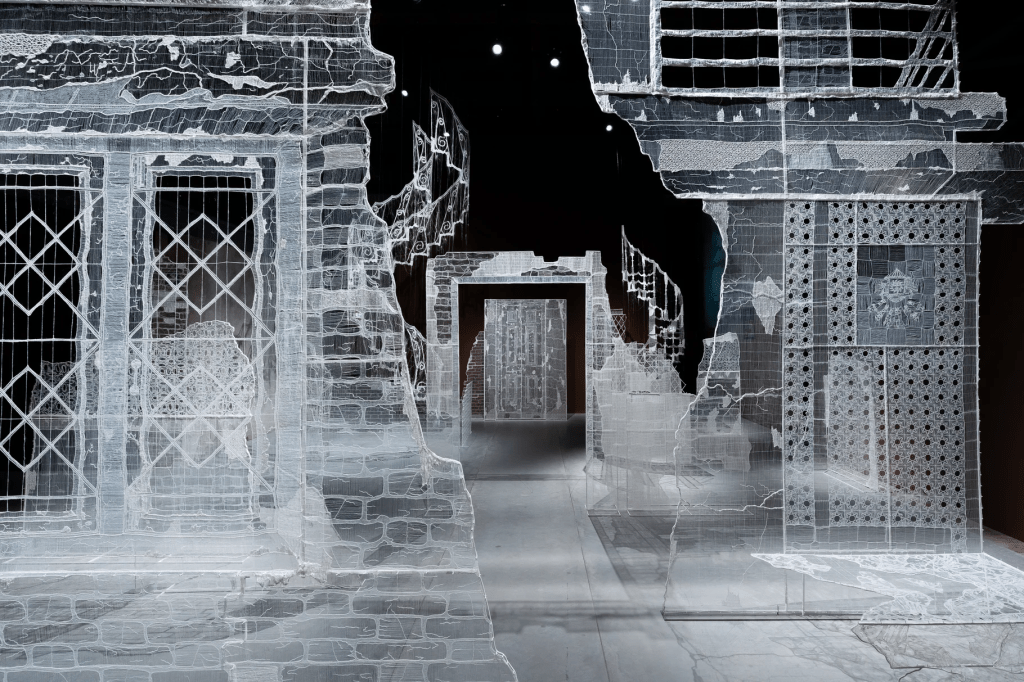
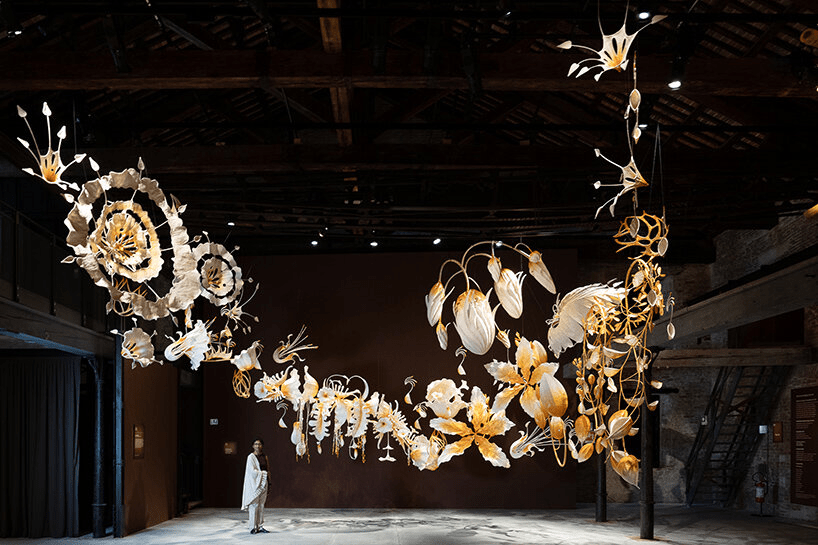
Images: The Indian Pavilion, Venice 2026: 1- Under the Same Sky, Ranjani Shettar – 2- Chaal, Asim Waqif, 2026 – 3&4- Skarma Sonam Tashi,2026 – 5- Alwar Balasubramaniam, 2026 – 6- “Permanent Address” by Sumakshi Singh, Copyright 2026 artists 2026 / Indian Pavilion 2026, Venice – Photos Joe Habben / La Biennale