LA « MENESUNDA » SELON MARTA MINUJÍN, MUSEO REINA SOFIA, MADRID
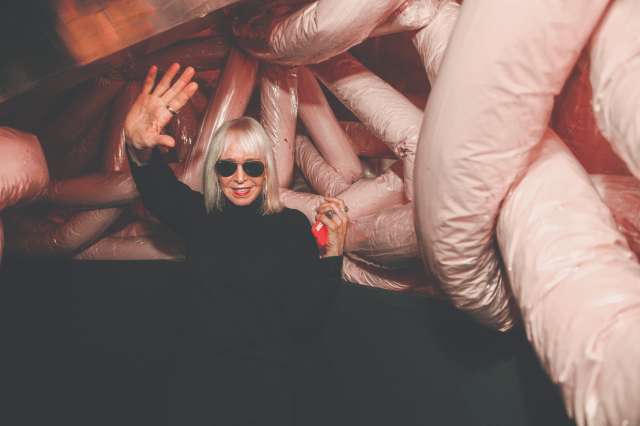
LA MENESUNDA SEGÙN MARTA MINUJÍN – Museo Nacional Centro de Arte Reina Sofia Madrid – 18 novembre 202 – 8 mars 2027.
En plus de soixante ans de carrière, Marta Minujín (née en 1943 à Buenos Aires) a mené l’une des carrières les plus exceptionnelles de l’art contemporain latino-américain. En 2016, elle a été récompensée pour l’ensemble de son œuvre par le prix Velázquez, la plus haute distinction du ministère espagnol de la Culture. Figure majeure des happenings, de l’art de l’installation et des pratiques participatives, son travail, centré sur l’expérience collective, a bouleversé les catégories artistiques traditionnelles et remis en question les frontières entre art et vie. L’exposition « La Menesunda según Marta Minujín » (La Ménesunda selon Marta Minujín) reconstitue l’une de ses œuvres les plus essentielles, aujourd’hui considérée comme une réalisation pionnière dans l’histoire des installations immersives de la seconde moitié du XXe siècle.
Créée en 1965 par Marta Minujín et Rubén Santantonín pour le Centre des arts visuels de l’Instituto Torcuato Di Tella à Buenos Aires, dans un contexte d’intense effervescence conceptuelle et de profondes transformations culturelles en Argentine, La Menesunda a radicalement bouleversé le rapport entre l’œuvre et le spectateur. Conçue par Minujín et Santantonín comme un « environnement » éphémère, l’œuvre substitue à la contemplation une expérience multisensorielle, transformant l’espace d’exposition en un lieu de participation active. La version présentée par le Museo Nacional Centro de Arte Reina Sofía est le fruit d’un travail de recherche entrepris en 2015 au Museo de Arte Moderno de Buenos Aires, visant à recréer l’œuvre à partir de photographies, d’enregistrements filmés et d’autres documents, en étroite collaboration avec l’artiste. Après avoir été exposée à Buenos Aires, puis au New Museum de New York et au Copenhagen Contemporary, cette reconstitution est présentée pour la première fois en Espagne.
En lunfardo, l’argot de Buenos Aires et de Montevideo, « menesunda » désigne la confusion, un mélange d’éléments disparates, une situation délicate. Ce terme synthétise l’esprit d’une œuvre qui intègre une grande variété de médiums artistiques et de stimuli sensoriels, impliquant directement ceux qui la traversent et brouillant les frontières entre art et quotidien. La Menesunda a condensé nombre de problématiques qui préoccupaient l’avant-garde des années 1960 : la possibilité de pénétrer l’esprit d’une artiste femme, l’émergence de la culture de masse, l’intégration des médias de masse au langage artistique, la centralité du spectateur et la possibilité d’appréhender l’art comme une pratique partagée. Son caractère radical a non seulement transformé la conception des expositions, mais a aussi préfiguré des formes de production artistique dont la pertinence perdure et qui définissent une part importante des pratiques contemporaines.
L’exposition « La Menesunda » au Musée Reina Sofía est accompagnée d’un parcours documentaire retraçant les happenings, performances et actions participatives développés par Marta Minujín entre 1963 et 1985. À travers des photographies, des dessins et divers documents d’archives, l’exposition offre un panorama complet de l’intense processus expérimental qui a marqué plus de vingt ans d’engagement artistique. Après un séjour à Paris, où elle découvre le Nouveau Réalisme et délaisse la peinture au profit des assemblages et de l’art performance, Minujín travaille à Buenos Aires et à New York, où elle conçoit certaines de ses œuvres les plus radicales. Tout au long de sa carrière, d’actions comme Simultaneidad en simultaneidad (Simultanéité dans la simultanéité), impliquant des interventions à la télévision et à la radio, et El pago de la deuda externa con choclos (Payer la dette étrangère avec des épis de maïs), créée en collaboration avec Andy Warhol, à la série La caída de los mitos universales (La chute des mythes universels) présentant les œuvres remarquables El Obelisco de pan dulce (L’obélisque en pain sucré) et El Partenón de libros (Le Parthénon des livres), elle a continuellement exploré de nouvelles façons de participer et d’intervenir dans l’espace public.
Plus de soixante ans après sa création, La Menesunda conserve sa capacité à interroger les mécanismes de construction de notre imaginaire collectif. Dans un présent saturé par la circulation incessante des images et la spectacularisation du quotidien, cette installation d’installations demeure une invitation à appréhender l’art non comme un objet de contemplation distant, mais comme un événement qui n’existe pleinement que lorsqu’on y participe. Il en résulte une expérience esthétique qui influence la subjectivité de ceux qui s’y adonnent. En questionnant les rapports entre réalité et représentation de manière radicalement imaginative,
La Menesunda nous rappelle l’une des missions essentielles des musées : élargir notre vision du monde.
__________________
LA MENESUNDA ACCORDING TO MARTA MINUJÍN – Museo Nacional Centro de Arte Reina Sofia Madrid – 18 november 202 – 8 march 2027.
Over the course of more than six decades, Marta Minujín (b. 1943, Buenos Aires) has developed one of the most exceptional careers in contemporary Latin American art. In 2016 she was recognized for her achievements with the highest honor from Spain’s Ministry of Culture, the Velázquez Prize for Visual Arts. She has been a key figure in happenings, installation art, and participatory practices, and her work—with collective experience at its core—has split open traditional artistic categories and called into question the boundaries between art and life. The exhibition La Menesunda según Marta Minujín (La Menesunda According to Marta Minujín) reconstructs one of her most essential works, today considered a pioneering achievement in the history of immersive installations from the second half of the twentieth century.
Created in 1965 by Marta Minujín and Rubén Santantonín for the Instituto Torcuato Di Tella’s Centro de Artes Visuales in Buenos Aires, in a context of tremendous conceptual experimentation and profound cultural transformations in Argentina, La Menesunda radically changed the relationship between work and viewer. Conceived by Minujín and Santantonín as an ephemeral “environment,” the work replaced contemplation with multisensory experience, turning the space of the exhibition into a site for active participation. The version presented by the Museo Nacional Centro de Arte Reina Sofía is the result of research that began in 2015 at the Museo de Arte Moderno de Buenos Aires to recreate this work on the basis of photographs, film recordings, and other materials, in close collaboration with the artist herself. Having been shown in Buenos Aires and then at the New Museum in New York and at the Copenhagen Contemporary, this reconstruction is appearing for the first time in Spain.
In Lunfardo, the slang of Buenos Aires and Montevideo, “menesunda” refers to confusion, a mixture of disparate elements, or an awkward situation. The term synthesizes the spirit of a work that integrates a wide variety of artistic mediums and sensory stimuli, directly implicating those who move through it and blurring the boundaries between art and daily life. La Menesunda condensed many of the issues that concerned much of the 1960s avant-garde: the possibility of entering the mind of a woman artist, the eruption of mass culture, the incorporation of mass media into artistic language, the centrality of the viewer, and the possibility of understanding art as a shared practice. Its radical nature not only changed how exhibitions were understood, it also foreshadowed forms of artistic production whose continued relevance defines a significant portion of contemporary practices.
The exhibition of La Menesunda at the Museo Reina Sofía is paired with a documentary journey through the happenings, performances, and participatory actions that Marta Minujín developed between 1963 and 1985. Through photographs, drawings, and a range of archival materials, the exhibition provides a thorough overview of the intense experimental process that defined more than two decades of artistic commitment. Following her stay in Paris, where she came into contact with Nouveau Réalisme and abandoned painting in favor of assemblages and performance art, Minujín began working in both Buenos Aires and New York, where she developed some of her most radical work. Throughout her career, from actions like Simultaneidad en simultaneidad (Simultaneity in Simultaneity), involving interventions in television and radio, and El pago de la deuda externa con choclos (Paying the Foreign Debt with Ears of Corn), created in collaboration with Andy Warhol, to the series La caída de los mitos universales (The Fall of Universal Myths) featuring the standout works El Obelisco de pan dulce (The Obelisk in Sweet Bread) and El Partenón de libros (The Parthenon of Books), she has continually explored new ways of participating in and intervening in public space.
More than sixty years after it was created, La Menesunda retains its capacity to interrogate the ways in which our collective imaginary is constructed. In a present saturated by the incessant circulation of images and the spectacularization of daily life, this installation of installations remains an invitation to understand art not as a distant object of contemplation but as an event that only fully exists when one is a participant in it. The result is an aesthetic experience that affects the subjectivity of those who take part. In questioning the relationships between reality and representation in a radically imaginative way, La Menesunda reminds us of one of the key tasks of museums: to broaden the ways we see the world.
_________________
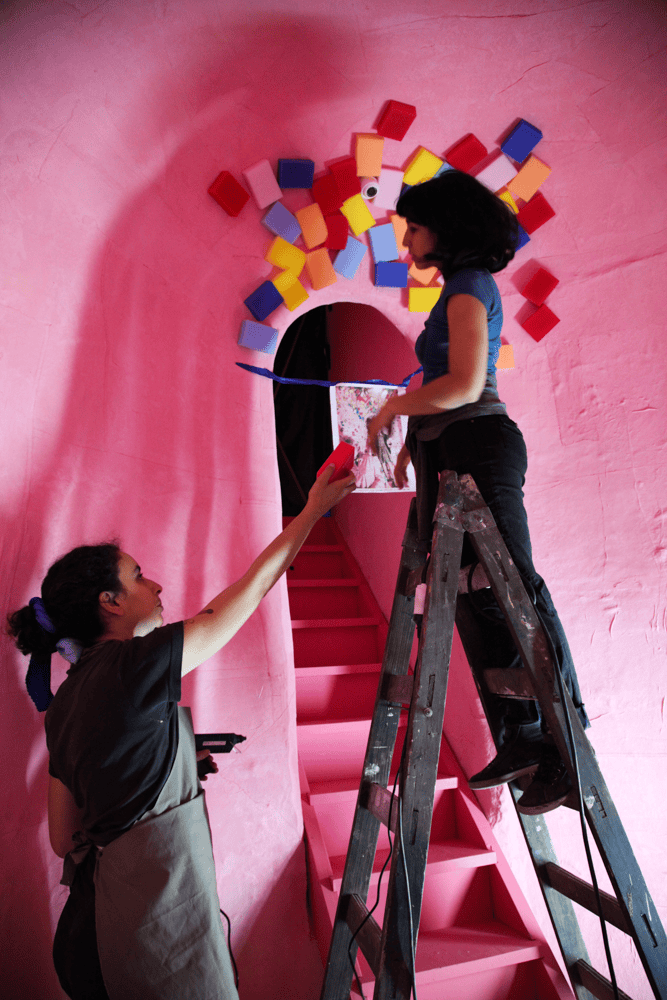
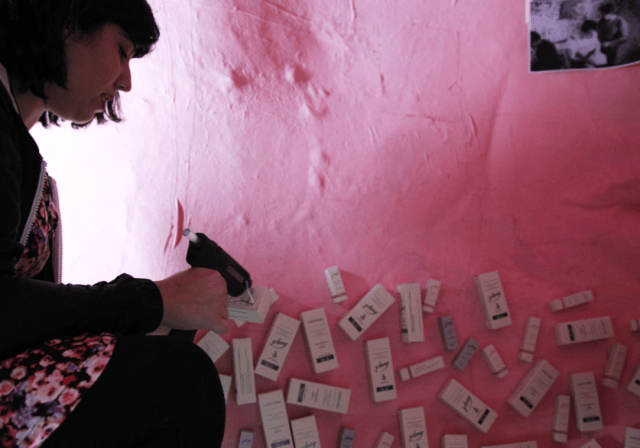
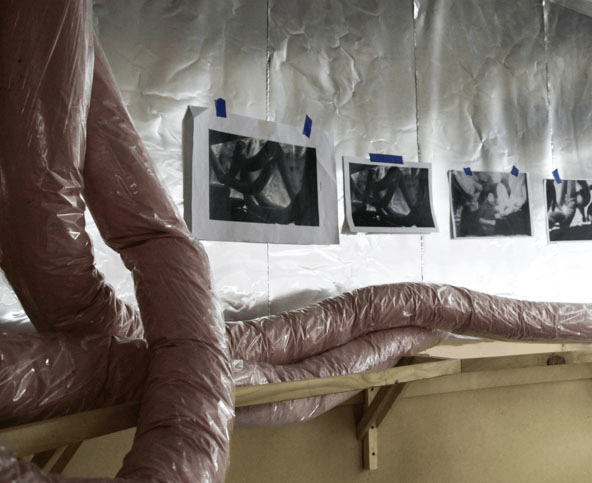
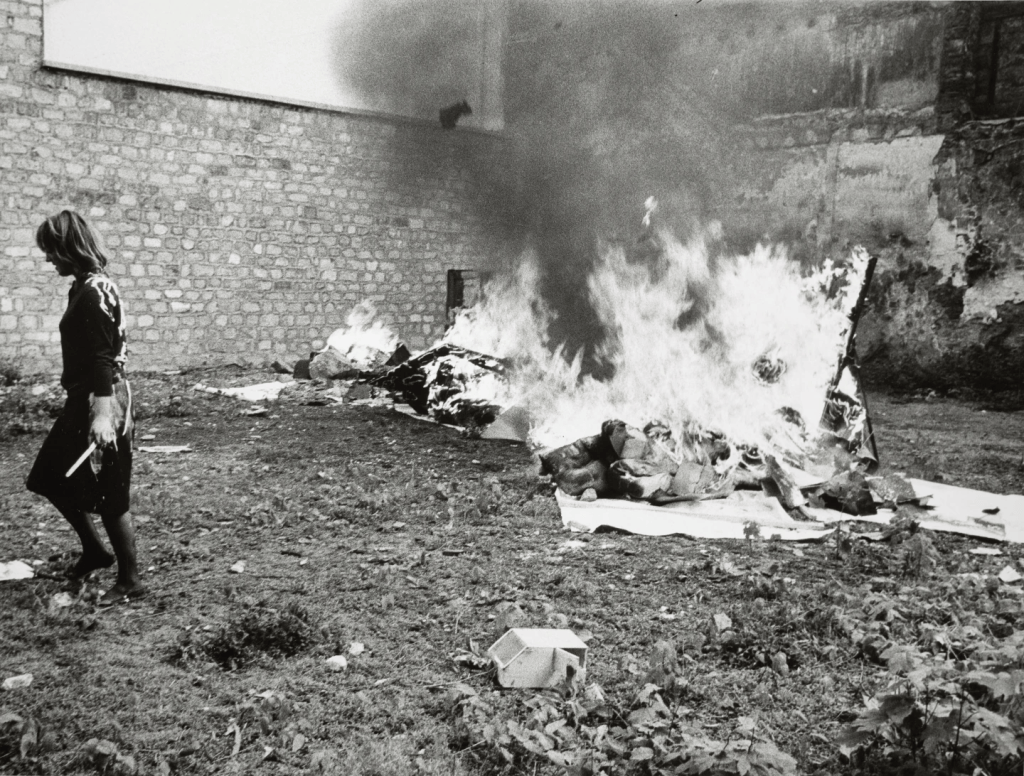
Images: 1 to 4: La Menesunda según Marta Minujín – Copyright the artist – Courtesy Museo de Arte Moderno Buenos Aires, Museo Reina Sofia, Madrid – Photos Josefina Tommasi – 5- Marta Minujín, La Destrucción (The Destruction), 1963. Getty Research Institute, Los Angeles (2014.R.20) Donation by the Roy Lichtenstein Foundation, in memory of Harry Shunk and Janos Kender. Photograph: Shunk-Kender © J. Paul Getty Trust.