À LA BOURSE DU COMMERCE, « REMEMBER ME » : EN PLEIN DANS LA FOCALE
REMEMBER ME – Bourse du Commerce, Collection Pinault, Paris – Jusqu’au 18 janvier 2027.
Lorsque la Collection Pinault, située à la Bourse de Commerce près de Halles à Paris, décide de parler photographie, elle n’y va pas de main morte et sort le grand jeu : un Palais entièrement consacré à ses collections… un beau voyage dans le temps…
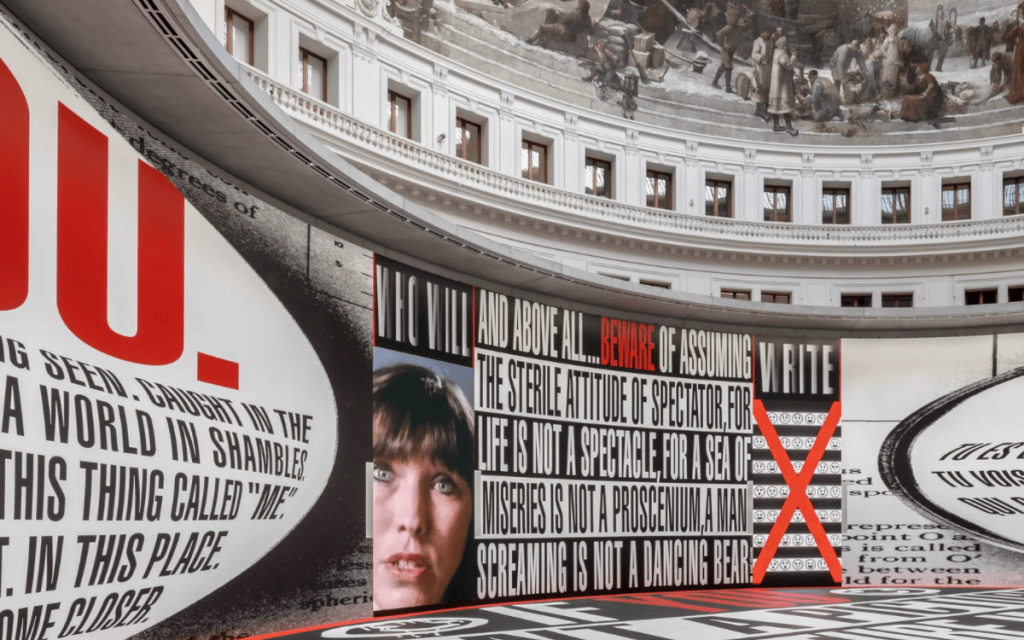
À chaque nouvelle exposition, le défi architectural de ce bâtiment parisien consiste à trouver l’œuvre capable d’habiter – et ici, d’habiller – la Rotonde centrale. Cet espace circulaire, d’ordinaire complexe à investir, trouve avec The History of Tears de Barbara Kruger une création à sa démesure. Gigantesque, colorée, puissante et résolument révolutionnaire, cette installation multisupport mêle le rouge, le noir et le blanc à de la vidéo, du son et des messages percutants. Le résultat est proprement saisissant. Une fois ce choc visuel passé, on devine que la suite du parcours sera une réussite. D’abord parce que les salles suivantes délaissent le gigantisme de la coupole, mais aussi parce que les œuvres y adoptent une autre fonction que celle de la sidération pure, qui frappe ici le visiteur depuis les coursives hautes comme depuis le sol de la nef.
En longeant le corridor, on découvre une salle consacrée au célèbre photographe américain et confident des stars, Irving Penn. Les familiers de la Collection Pinault ne seront pas surpris de le retrouver ici : le Palazzo Grassi de Venise avait déjà mis en lumière une partie de ses 450 tirages lors de la remarquable exposition « Irving Penn, Résonance ». La véritable surprise réside plutôt dans l’audace de l’accrochage. Les œuvres s’élèvent quasi du sol au plafond selon un rythme ondulatoire, où les portraits en noir et blanc sont ponctués de natures mortes vibrantes de couleur. Ce contraste rehausse l’intensité des monochromes, au cœur desquels on reconnaît les icônes mondiales immortalisées dans ses studios de Paris et de New York, de la fin des années 1940 au milieu des années 1980. Ce « monde selon Penn » réactive notre mémoire collective tout en nous faisant goûter à une époque suspendue. Ces noirs et blancs somptueux semblent avoir organiquement poussé sur les murs, à la manière de trésors exhumés de fouilles archéologiques.
Au sortir de cette capsule temporelle nostalgique, d’autres installations de Barbara Kruger se dévoilent, arborant ce triptyque noir, rouge et blanc si caractéristique de son travail. Parmi elles, Remember Me donne son titre à l’ensemble de l’exposition. Un œil injecté de sang, photographié en gros plan et en noir et blanc, est détouré de rouge. En dessous, l’inscription « Remember » s’affiche en lettres modestes, tandis que le mot « ME » surgit en caractères bien plus imposants. C’est un manifeste évident adressé à une société qui place le « Moi » au centre de tout. Le fond de l’image, composé de lanières colorées, crée un effet pixelisé qui imprime la rétine à la manière d’un flash ou d’un stroboscope.
En grimpant vers la Galerie 3, un effort qui évoque l’ascension d’un col du Tour de France, on accède à un espace entièrement dédié à Raymond Depardon, intitulé La France. Cofondateur de l’agence Gamma et membre éminent de Magnum, Depardon est un monument de la discipline, un regard unique posé sur son propre pays. Entre 2005 et 2009, il a parcouru le territoire pour en ramener les clichés d’une France suspendue dans le temps. Dans leur jus, teintées de couleurs presque kitsch et flanquées de publicités démodées, ces images font la poésie des terres reculées. Elles agissent comme une madeleine de Proust et arrachent un sourire au visiteur, qui se surprend à penser : « Ah oui, c’était comme ça avant », alors même que ces instants ont été glanés à une époque si proche de la nôtre. Là encore, le soin apporté à la scénographie est remarquable. Si certaines photographies habillent traditionnellement les murs, d’autres sont disposées tête-bêche au centre de la pièce suspendus des plafonds. Cette disposition permet non seulement une observation de près, mais invite aussi à tourner autour des œuvres, comme autour des deux faces d’une pièce de monnaie, pour en savourer les détails, une nuance de couleur, un slogan ou un panneau de signalisation. Loin de toute nostalgie larmoyante, on sent que la couleur est le moteur de ce projet, déclenchant une joie sincère face à ce portrait de la France.
Plus haut encore, à partir de la Galerie 4 et sur tout le pourtour de la grande coupole, plusieurs salles regroupent d’autres chefs-d’œuvre de l’histoire de la photographie. Le parcours s’ouvre sur la section « Devant la mer », où les marines sont à l’honneur, un thème cher au collectionneur François Pinault. Gustave Le Gray y trône en maître, tandis que Hiroshi Sugimoto, Eileen Quinlan et Wolfgang Tillmans nous éclaboussent de leurs embruns. On vogue à leurs côtés, saisis d’un soudain désir de grand large. Le voyage se poursuit à travers les concepts de sérialité, de typologie et de fabrique de l’image. Les tirages argentiques d’August Sander y côtoient les trucages d’Arthur Fellig, dit Weegee, notamment sa célèbre Liberace, Stretch Caricature (1955), dont le double menton et le sourire crispé s’avèrent plus inquiétants que réconfortants.
On traverse ensuite un espace célébrant l’art de la composition. C’est un pur bonheur d’y admirer le célèbre cliché d’Henri Cartier-Bresson, Derrière la gare Saint-Lazare, ou l’emblématique Dovima with Elephants de Richard Avedon. Capturée au Cirque d’Hiver à Paris, cette image montre le mannequin en robe du soir Dior, retenu dans un équilibre gracieux entre deux éléphants, une main posée sur la trompe de l’un, l’autre sur l’oreille du second. Si les différentes parties de l’anatomie humaine traversent de nombreuses œuvres, les mains bénéficient ici d’une salle exclusive. On y retient particulièrement Mother de Maurizio Cattelan, montrant des mains jointes émergeant d’une terre rouge. Cette photographie documente une performance réalisée lors du vernissage de la 48e Biennale de Venise en 1999, pour laquelle l’artiste avait demandé à un fakir indien de s’ensevelir, ne laissant visibles que ses mains en prière. Cette image puissante convoque des dualités universelles : la vie et la mort, l’espoir et l’agonie, l’éphémère et l’éternité, tout en rendant un hommage poignant à la mère de l’artiste, disparue prématurément.
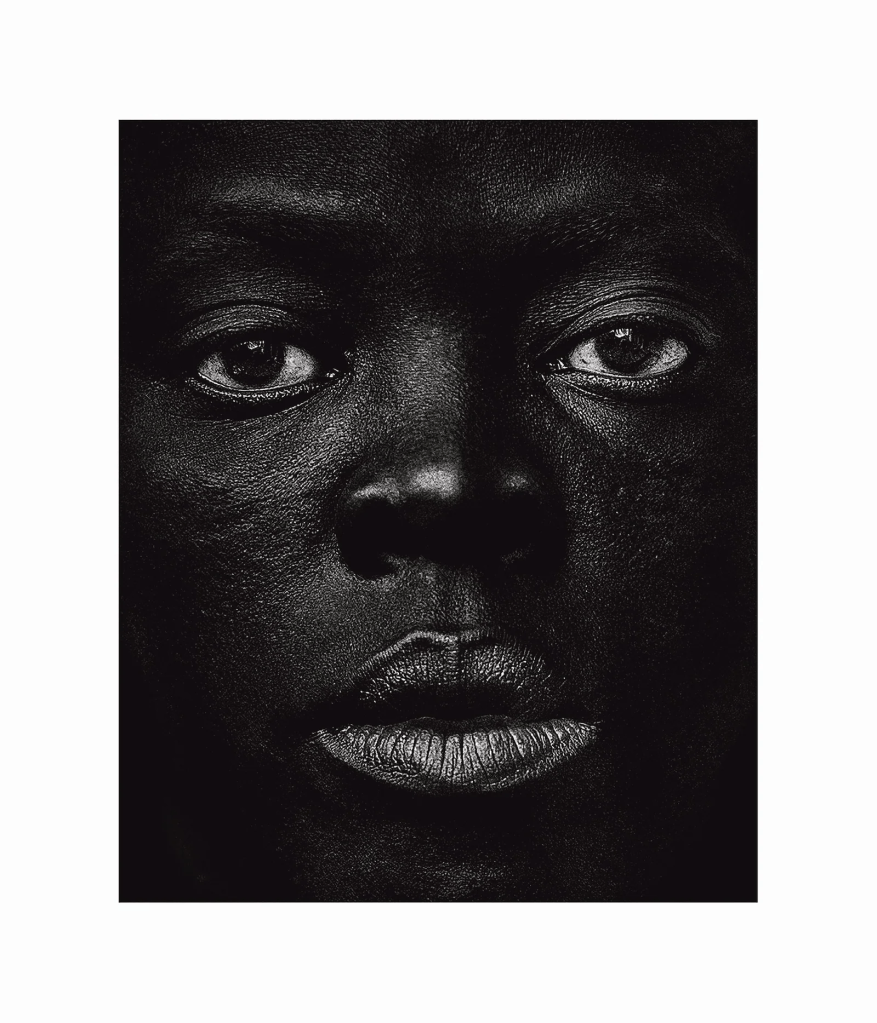
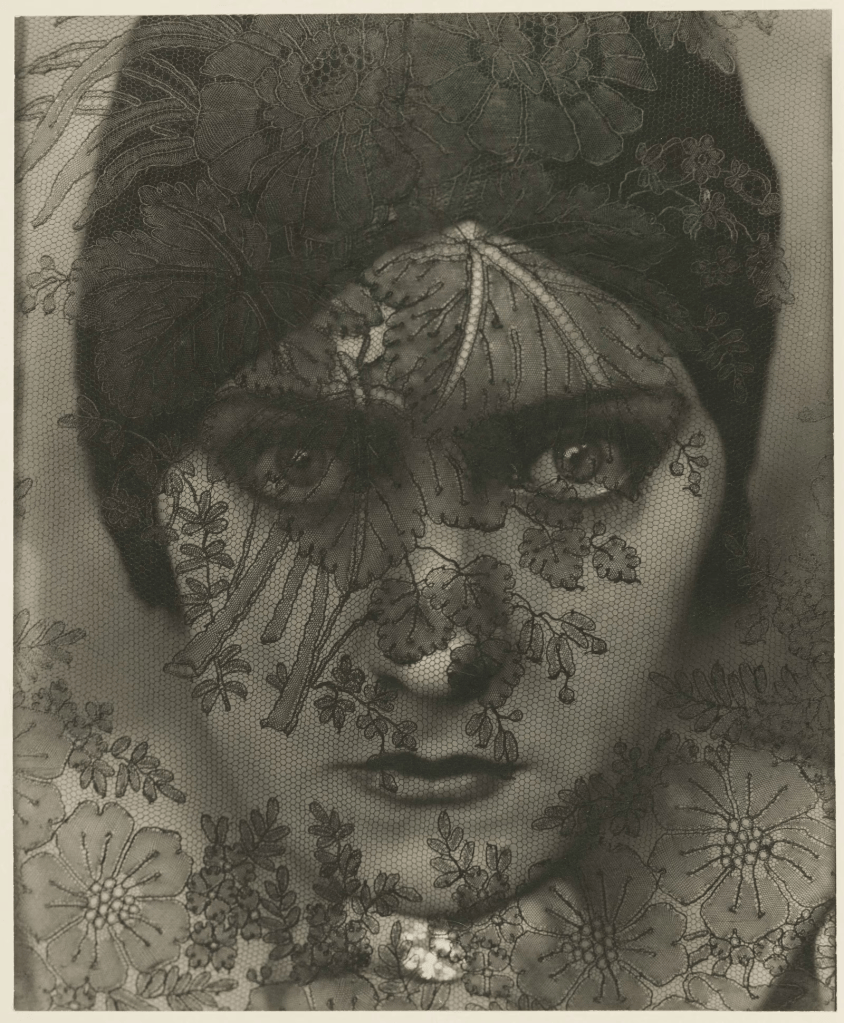
Les visages font évidemment l’objet d’un traitement tout aussi riche dans la section « Face à face », où les portraits intimistes de Peter Hujar dialoguent avec ceux, plus conceptuels, de Richard Prince. Si les détails captivent, les corps entiers occupent également une place de choix dans cette rétrospective. On y croise les silhouettes immortalisées par Annie Leibovitz, Zanele Muholi, Alexandre Rodtchenko ou Edward Steichen. Par ailleurs, le paranormal et les accidents visuels, qui ont fait les grandes heures de la discipline, s’incarnent dans les œuvres de Francesca Woodman ou de Tyler Mitchell, cohabitant avec les expérimentations surréalistes de Man Ray.
Quoi qu’il en soit, certains tirages marquent durablement l’esprit. Le visage de Marilyn Monroe capturé par Richard Avedon émeut par le contraste saisissant entre la pâleur de sa peau et le scintillement de sa robe noire. La Bewegungsstudie (Étude de mouvement) de Rudolf Koppitz surprend par la grâce de ce corps dénudé, chorégraphié devant trois femmes drapées de noir et pieds nus, évoquant les danses expressionnistes de Mary Wigman qui inspirèrent tant Pina Bausch. On sourit devant le portrait de Keith Haring par Annie Leibovitz, où le corps de l’artiste s’efface sous les graphismes qui l’ont rendu mondialement célèbre. Enfin, si le corps de Ronald Fischer, cet apiculteur de Californie photographié par Avedon, impressionne et rappelle les installations d’insectes de Jan Fabre, celui du danseur Rudolf Noureev intrigue tout autant. Fixé par l’objectif du même photographe, il fascine par sa musculature athlétique autant que par la nudité frontale de son sexe. Cette exploration anatomique audacieuse fait directement écho aux travaux d’Avedon et à ceux, tout aussi sculpturaux, d’Helmut Newton, dont on peut admirer le monumental Big Nude I, un nu féminin en pied altier et puissant, simplement habillé de chaussures à talons.
Tourner, monter, descendre… Il ne faut pas oublier de passer par le sous sol de la Bourse de commerce, se lover dans les sièges de l’auditorium et passer un instant avec le film – diaporama de Nan Golding, autre photographe, autre temps mais tout aussi passionnant par la capture qu’elle fait d’une époque et de ses habitants… Après ça on n’a qu’une hâte, placer son oeil dans un objectif et en réglant la focale de mettre dans le mille.
Commissariat : Matthieu Humery, conseiller en photographie, Pinault Collection avec la collaboration de Lola Regard, chargée de projets.
Emmanuel Serafini
_________________
REMEMBER ME – Bourse du Commerce, Pinault Collection, Paris – Until January 18, 2027.
When the Pinault Collection, located at the Bourse de Commerce near Les Halles in Paris, decides to talk about photography, it doesn’t hold back and pulls out all the stops: a Palace entirely dedicated to its collections… a beautiful journey through time…
With each new exhibition, the architectural challenge of this Parisian building lies in finding a work capable of inhabiting—and in this case, adorning—the central Rotunda. This circular space, usually complex to occupy, finds in Barbara Kruger’s The History of Tears a creation perfectly suited to its scale. Gigantic, colorful, powerful, and resolutely revolutionary, this multimedia installation blends red, black, and white with video, sound, and impactful messages. The result is truly striking. Once this visual shock has subsided, one senses that the rest of the exhibition will be a success. Firstly, because the following rooms move away from the grandeur of the dome, but also because the works there adopt a function other than that of pure awe, which here strikes the visitor from the upper galleries as well as from the floor of the nave.
Walking along the corridor, one discovers a room dedicated to the renowned American photographer and confidant of the stars, Irving Penn. Those familiar with the Pinault Collection will not be surprised to find him here: the Palazzo Grassi in Venice already showcased some of his 450 prints in the remarkable exhibition « Irving Penn, Resonance. » The real surprise lies in the audacity of the installation. The works rise almost from floor to ceiling in an undulating rhythm, where black and white portraits are punctuated by still lifes bursting with color. This contrast enhances the intensity of the monochromes, at the heart of which we recognize the global icons immortalized in his studios in Paris and New York, from the late 1940s to the mid-1980s. This « world according to Penn » reactivates our collective memory while allowing us to experience a suspended era. These sumptuous black and white prints seem to have organically grown on the walls, like treasures unearthed from an archaeological dig.
Emerging from this nostalgic time capsule, other installations by Barbara Kruger are revealed, displaying the black, red, and white triptych so characteristic of her work. Among them, Remember Me lends its title to the entire exhibition. A bloodshot eye, photographed in close-up and in black and white, is outlined in red. Below, the inscription » Remember » appears in modest letters, while the word » ME » emerges in much larger characters. It is a clear manifesto addressed to a society that places the « I » at the center of everything. The background of the image, composed of colored strips, creates a pixelated effect that imprints itself on the retina like a flash or a strobe light.
Climbing towards Gallery 3, an effort reminiscent of ascending a Tour de France mountain pass, leads to a space entirely dedicated to Raymond Depardon, entitled « France . » Co-founder of the Gamma agency and a prominent member of Magnum Photos, Depardon is a giant of the discipline, offering a unique perspective on his own country. Between 2005 and 2009, he traveled across the country, capturing images of a France suspended in time. Presented in their raw, almost kitschy colors and accompanied by vintage advertisements, these images evoke the poetry of remote landscapes. They act like a Proustian madeleine, bringing a smile to the visitor’s face, who finds themselves thinking, « Ah yes, it was like that before, » even though these moments were captured in a time so close to our own. Here again, the attention to detail in the exhibition design is remarkable. While some photographs traditionally adorn the walls, others are arranged upside down in the center of the room, suspended from the ceiling. This arrangement not only allows for close observation but also invites viewers to walk around the works, as if circling the two sides of a coin, to savor the details: a nuance of color, a slogan, or a road sign. Far from any maudlin nostalgia, one senses that color is the driving force of this project, sparking genuine joy in the face of this portrait of France.
Higher still, from Gallery 4 and all around the perimeter of the large dome, several rooms house other masterpieces of photographic history. The exhibition opens with the « Before the Sea » section, where seascapes take center stage, a theme dear to collector François Pinault. Gustave Le Gray reigns supreme, while Hiroshi Sugimoto, Eileen Quinlan, and Wolfgang Tillmans splash us with their sea spray. We sail alongside them, seized by a sudden yearning for the open sea. The journey continues through the concepts of seriality, typology, and image-making. August Sander’s silver gelatin prints are displayed alongside the special effects of Arthur Fellig, known as Weegee, notably his famous Liberace, Stretch Caricature (1955), whose double chin and strained smile prove more unsettling than comforting.
We then pass through a space celebrating the art of composition. It’s a pure delight to admire Henri Cartier-Bresson’s famous photograph, Behind the Gare Saint-Lazare , or Richard Avedon’s iconic Dovima with Elephants . Captured at the Cirque d’Hiver in Paris, this image shows the model in a Dior evening gown, held in a graceful balance between two elephants, one hand resting on the trunk of one, the other on the ear of the other. While different parts of the human anatomy appear in numerous works, hands are given their own dedicated room. Maurizio Cattelan’s Mother stands out , showing clasped hands emerging from red earth. This photograph documents a performance staged at the opening of the 48th Venice Biennale in 1999, for which the artist asked an Indian fakir to bury himself, leaving only his hands in prayer visible. This powerful image evokes universal dualities: life and death, hope and agony, the ephemeral and the eternal, while also paying a poignant tribute to the artist’s mother, who passed away prematurely.
Faces are, of course, treated with equal care in the « Face to Face » section, where Peter Hujar’s intimate portraits converse with the more conceptual ones of Richard Prince. While the details captivate, entire bodies also occupy a prominent place in this retrospective. Here, we encounter the silhouettes immortalized by Annie Leibovitz, Zanele Muholi, Alexander Rodchenko, and Edward Steichen. Furthermore, the paranormal and visual accidents, which defined the discipline’s golden age, are embodied in the works of Francesca Woodman and Tyler Mitchell, coexisting with Man Ray’s surrealist experiments.
In any case, some prints leave a lasting impression. Richard Avedon’s portrait of Marilyn Monroe is moving because of the striking contrast between the pallor of her skin and the shimmer of her black dress. Rudolf Koppitz’s Bewegungsstudie (Movement Study) surprises with the grace of this nude body, choreographed before three women draped in black and barefoot, evoking the expressionist dances of Mary Wigman that so inspired Pina Bausch. We smile at Annie Leibovitz’s portrait of Keith Haring, where the artist’s body fades beneath the graphic elements that made him world-famous. Finally, while Avedon’s photograph of Ronald Fischer, the California beekeeper, impresses and recalls Jan Fabre’s insect installations, the body of the dancer Rudolf Nureyev is equally intriguing. Captured by the same photographer’s lens, he fascinates with his athletic physique as much as with the frontal nudity of his genitals. This audacious anatomical exploration directly echoes the works of Avedon and the equally sculptural works of Helmut Newton, whose monumental Big Nude I , a full-length female nude, proud and powerful, adorned simply with high heels, can be admired.
Turning, going up, going down… Don’t forget to go through the basement of the Bourse de Commerce, curl up in the seats of the auditorium and spend a moment with the film – a slideshow by Nan Golding, another photographer, another time but just as exciting for the capture she makes of an era and its inhabitants… After that you only have one desire, to place your eye in a lens and by adjusting the focal length to hit the bullseye.
Curator: Matthieu Humery, photography consultant, Pinault Collection with the collaboration of Lola Regard, project manager.
Emmanuel Serafini
_________________
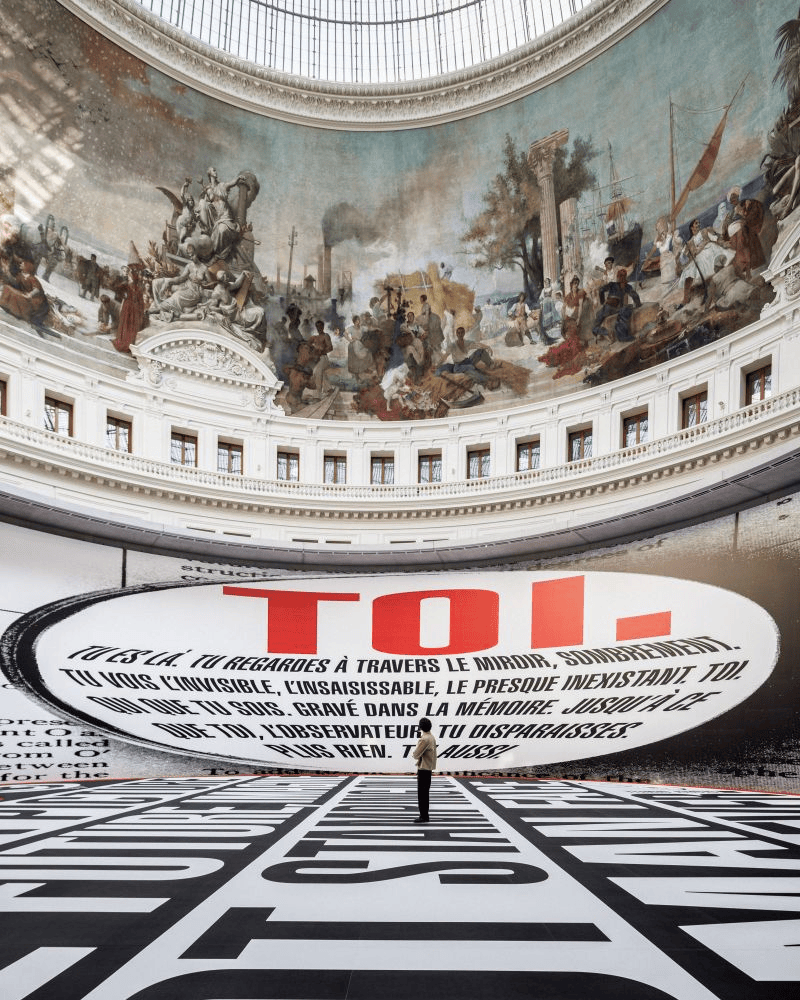
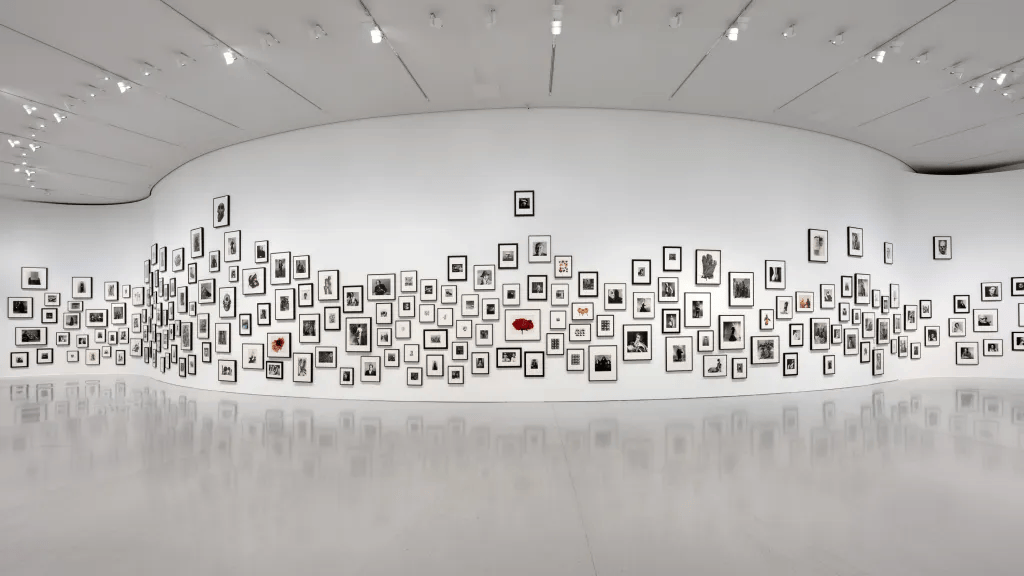
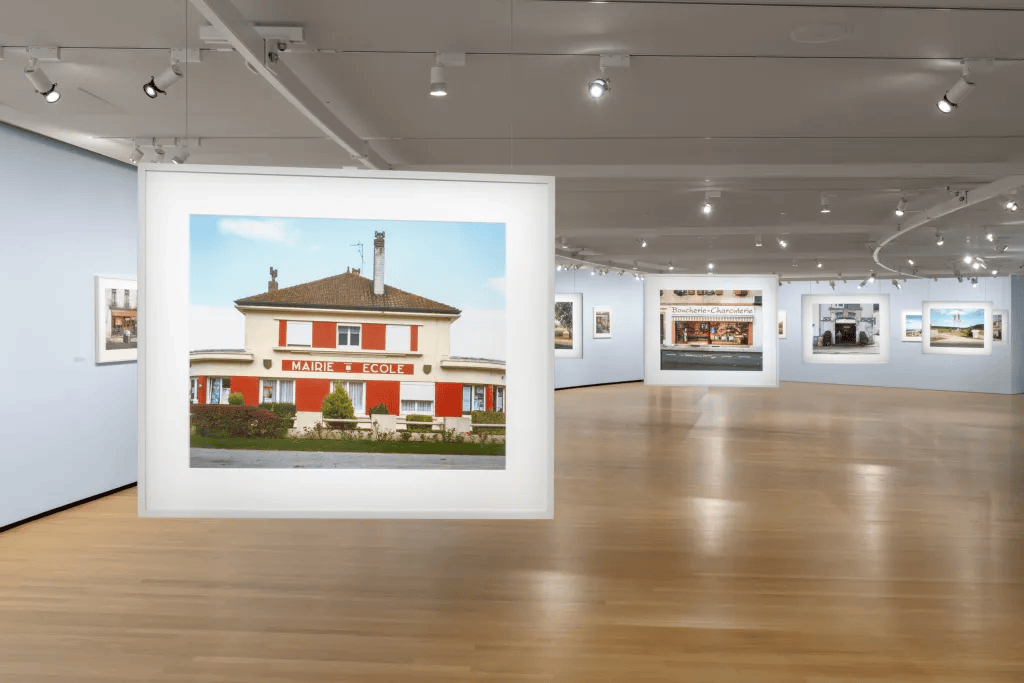
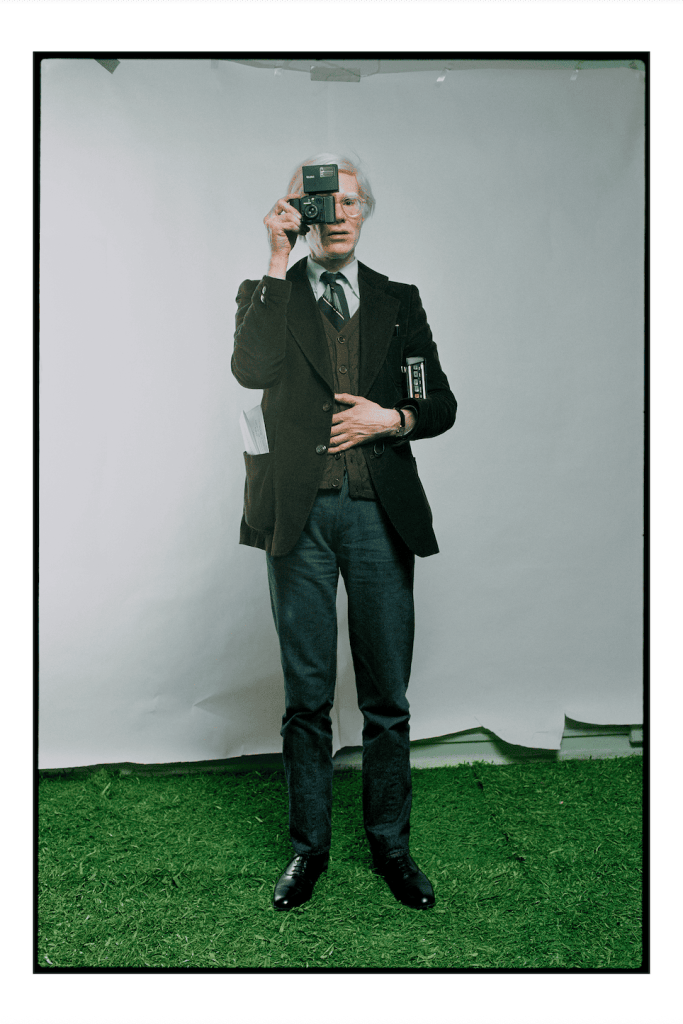
Images: Annie Leibovitz, Andy Warhol, New York City, 1976 – 2 & 3- Dans le hall de la Bourse du Commerce, Barbara Kruger, The History of Tears 2026 – 4- Zanele Muholi, Mfana, Philadelphia, 2019 – 5- Cindy Sherman, Untitled #21, 1978 – 6- Edward Steichen, Gloria Swanson, New York, 1924 – 7- « Le monde selon Penn », Bourse de Commerce – Pinault Collection, Paris, 2026-2027 © Tadao Ando Architect & Associates, Niney et Marca Architectes, agence Pierre-Antoine Gatier. © Irving Penn. Photo : Nicolas Brasseur – 8- « Raymond Depardon. La France », Bourse de Commerce – Pinault Collection, Paris, 2026-2027 © Tadao Ando Architect & Associates, Niney et Marca Architectes, agence Pierre-Antoine Gatier. © Raymond Depardon. Photo : Nicolas Brasseur – All images copyright the artists and estates – Courtesy Bourse de Commerce – Pinault Collection. 2026/2027