AU BARBICAN, ‘ROBERT RYMAN: THE REAL THING’, UNE RETROSPECTIVE MAJEURE DU PEINTRE ICONIQUE DU BLANC
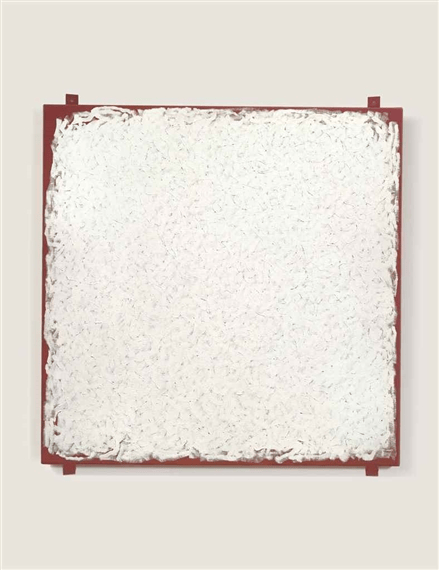
ROBERT RYMAN: THE REAL HING – Barbican Centre, London – October 8, 2026 – February 27, 2027.
À l’automne 2026, le Barbican présente une importante rétrospective consacrée à la carrière exceptionnelle du peintre américain Robert Ryman (1930-2019). « Robert Ryman : The real Thing » est la première exposition au Royaume-Uni à explorer en profondeur l’œuvre de Ryman depuis plus de 30 ans et constituera un temps fort de la saison d’automne 2026 du Barbican .
« The real Thing » réunit plus de 60 œuvres issues de la prolifique carrière de Ryman, du milieu des années 1950 au début des années 2010. Organisée par thèmes, l’exposition célébrera l’héritage de Ryman, peintre qui a rejeté les catégories de figuration et d’abstraction, choisissant plutôt de « peindre la peinture ».
Pendant près de 60 ans, Ryman s’est consacré à explorer – et à questionner – ce qui constitue une peinture : de la peinture, sur une surface, en relation avec le mur et exposée dans l’espace. Il a exploré les matériaux et leurs effets avec une rigueur et une originalité remarquables, créant des peintures subtiles et surprenantes qui révèlent la matière dans toute sa pureté. Bien que Ryman ait principalement utilisé la peinture blanche et un format carré, cette exposition met en lumière l’extraordinaire variété de son travail sur toile, lin, fibre de verre, acier, aluminium, plexiglas, papier calque et filtre à café, avec une palette de peintures incluant l’huile, l’acrylique, l’émail et l’époxy.
L’intérêt de Ryman pour la relation de la peinture au mur et sa présence en tant qu’objet dans l’espace se manifeste également dans son choix de rendre visibles différents systèmes d’accrochage, des fixations sur mesure aux vis et agrafes, en passant par le ruban adhésif, dans des œuvres allant du petit format intimiste au monumental. Pour Ryman, chaque tableau était une expérimentation, une exploration des matériaux et de leurs interactions avec leur environnement. L’exposition
« The Real Thing » part du principe que la compréhension de la peinture de Ryman est intemporelle et dépend de son contexte unique. Se définissant comme « réaliste », Ryman était convaincu que la poésie de la peinture résidait dans le ressenti et que l’on comprenait mieux la peinture par une expérience directe et personnelle plutôt que par l’intellect. Les galeries à l’étage mettront en lumière des aspects clés de son œuvre : sa formation initiale de saxophoniste de jazz et son rapport à la musique ; son processus de création en atelier ; l’utilisation de sa signature et de fixations sur mesure comme éléments de composition ; et son rapport au dessin. Au rez-de-chaussée, une sélection de tableaux, choisis parmi l’ensemble de la carrière de Ryman pour leurs liens esthétiques, offrira « l’expérience Ryman », invitant les visiteurs à porter une attention particulière à la subtilité, aux nuances et à la complexité visuelle des œuvres, en soulignant leurs similitudes et leurs différences.
Parmi les œuvres présentées figure Untitled, 1958 .une peinture de jeunesse inspirée par Mark Rothko que Ryman a réalisée alors qu’il travaillait comme gardien au Museum of Modern Art, jusqu’à Untitled (Background Music), vers 1962 , Surface Veil II , vers 1962. L’exposition présentera notamment des œuvres de la série « Pair Navigation » ( 1970) , de 1984 et 2002 , ainsi que des œuvres de la série « Series (White) » , réalisées entre 2003 et 2005. Une attention particulière sera portée au travail de Ryman dans son atelier, grâce à des documents d’archives rares et à la présentation de plusieurs œuvres de la série « Surface Veil » , dont beaucoup étaient exposées ensemble pour la dernière fois sur le mur de son atelier en 1970. Shanay Jhaveri, responsable des arts visuels au Barbican , déclare : « Depuis 2017, le Barbican a organisé des rétrospectives de certains des peintres les plus importants des XXe et XXIe siècles, parmi lesquels Jean-Michel Basquiat, Lee Krasner, Alice Neel et Noah Davis. « Robert Ryman : The Real Thing » s’inscrit dans la continuité de notre programmation, tout en faisant redécouvrir Ryman au public britannique plus de 30 ans après sa dernière grande exposition. Ryman, musicien de formation, parlait souvent de l’expérience de contempler des tableaux comme d’écouter de la musique, sachant que les deux pouvaient… » Susciter l’émerveillement. Nous anticipons que son œuvre sera appréciée et comprise plus profondément dans le cadre de notre programme interdisciplinaire, et espérons que notre architecture brutaliste emblématique offrira le cadre idéal pour contempler ses œuvres captivantes, réaffirmant ainsi le plaisir immense que procure simplement le fait de passer du temps à regarder un tableau.
Robert Ryman est né à Nashville, dans le Tennessee. Entre 1948 et 1950, il a étudié au Tennessee Polytechnic Institute de Cookeville et au George Peabody College for Teachers de Nashville. Après deux ans dans la réserve de l’armée, Ryman s’installe à New York en 1952 pour poursuivre une carrière de musicien de jazz professionnel. L’année suivante, il est embauché comme agent de sécurité au Museum of Modern Art de New York, où il travaillera pendant sept ans. Son expérience au musée l’a en partie incité à se consacrer à la peinture. Ryman a présenté sa première exposition personnelle à la galerie Paul Bianchini de New York en 1967, suivie de plusieurs expositions individuelles dans des galeries influentes d’Europe et des États-Unis à la fin des années 1960 et au début des années 1970, notamment à la Galerie Heiner Friedrich de Munich et de Cologne (1968, 1969, 1971, 1972) ; à la Galerie Konrad Fischer de Düsseldorf (1968, 1969, 1973) ; à la Galerie Fischbach de New York (1969, 1970, 1971) ; à la Galerie Yvon Lambert de Paris (1969) ; à la Galerie Dwan de New York (1971) ; et à la Galerie Lisson de Londres (1972-1973). Il a également présenté une exposition personnelle à la Whitechapel Gallery en 1977 et à la Tate en 1993.
________________________
In Autumn 2026, the Barbican presents a major new retrospective recognising the extraordinary career of American painter Robert Ryman (1930-2019). Robert Ryman: The Real Thing is the first exhibition in the UK to take an in-depth look at Ryman’s work in over 30 years and will be a key highlight of the Barbican’s Autumn 2026 season.
The Real Thing will feature over 60 works from Ryman’s prolific career from the mid-1950s up to the early 2010s. Arranged thematically, the exhibition will celebrate Ryman’s legacy as a painter who rejected the categories of representation and abstraction, choosing instead to ‘paint the paint’.
For nearly 60 years, Ryman dedicated himself to exploring – and questioning – what constitutes a painting: paint, on a surface, with a relationship to the wall and exhibited in space. He playfully and rigorously investigated materials and their effects, making subtle and surprising paintings that show and make visible materials as they are. Though Ryman primarily used white paint and a square format, this exhibition will reveal the remarkable variety Ryman produced as he worked across canvas, linen, fibreglass, steel, aluminium, Plexiglas, tracing paper, and coffee filter paper, using a range of paints including oil, acrylic, enamel, and epoxy.
Ryman’s interest in painting’s relationship to the wall and its presence as object in space is further seen in his choosing to make visible different hanging mechanisms ranging from custom-made fasteners, screws, and staples to masking tape in works that range from small and intimate to monumental in scale. For Ryman, every painting was a test to ‘see what would happen’ as he experimented with materials and the paintings’ interactions with each other and their surroundings.
The Real Thing takes as its starting point that an understanding of Ryman’s painting is unfixed, and is instead conditional on its unique setting. A self-described ‘realist’, Ryman believed that the poetry of painting was in feeling, and that painting was best understood through real, in-person experience rather than the intellect. The upstairs galleries will pay special attention to key aspects of Ryman’s work: his early training as a jazz saxophonist and his relationship to music; his studio process; his use of his signature and custom-made fixings as elements in a composition; and his relationship to drawing. Downstairs, a selection of paintings chosen from across Ryman’s career for their aesthetic relationships will present ‘the Ryman experience’, inviting visitors to play close attention to subtlety, nuance and visual complexity when viewing the works’ similarities and differences.
Featured works will include Untitled, 1958, an early painting inspired by Mark Rothko that Ryman made while working as a guard at The Museum of Modern Art, through to Untitled (Background Music), ca. 1962, Surface Veil II, ca. 1970, Pair Navigation, 1984 and 2002, and works from Series (White), made between 2003 to 2005. Special attention will be given to Ryman’s working in his studio through rare archival material and a display of several Surface Veil works, many of which were last seen together on Ryman’s studio wall in 1970.
Shanay Jhaveri, Head of Visual Arts at the Barbican, says: « Since 2017, the Barbican has staged retrospectives of some of the most significant painters of the 20th and 21st century, including Jean-Michel Basquiat, Lee Krasner, Alice Neel and Noah Davis. Robert Ryman: The Real Thing carries forward this strand of our programme, while re-introducing Ryman to UK audiences following his last major show over 30 years ago. Ryman was trained as a musician and often spoke about the experience of looking at paintings being similar to listening to music, knowing both could elicit delight. We anticipate his work will be appreciated and understood more profoundly within the context of our cross arts programme, and hope that our iconic brutalist architecture will provide the ideal setting in which to contemplate his alluring works, reaffirming that there are great pleasures to be had simply in spending time looking at a painting. »
Robert Ryman was born in Nashville, Tennessee. Between 1948 and 1950, he studied at the Tennessee Polytechnic Institute, Cookeville, and the George Peabody College for Teachers, Nashville. After two years in the Army Reserve Corps, Ryman moved to New York in 1952 to pursue a career as a professional jazz musician. The following year, he took a job as a security guard at The Museum of Modern Art, New York, where he would work for seven years. His time working at the museum in part inspired Ryman to devote his life toward painting.
Ryman had his first solo exhibition at Paul Bianchini Gallery, New York, in 1967, followed by several solo shows at influential galleries in Europe and the United States in the late 1960s and early 1970s, including Galerie Heiner Friedrich, Munich, and Cologne (1968, 1969, 1971, 1972); Galerie Konrad Fischer, Düsseldorf (1968, 1969, 1973); Fischbach Gallery, New York (1969, 1970, 1971); Galerie Yvon Lambert, Paris (1969); Dwan Gallery, New York (1971); and Lisson Gallery, London (1972-73). He had a solo exhibition at Whitechapel Gallery in 1977 and Tate 1993.
________________________
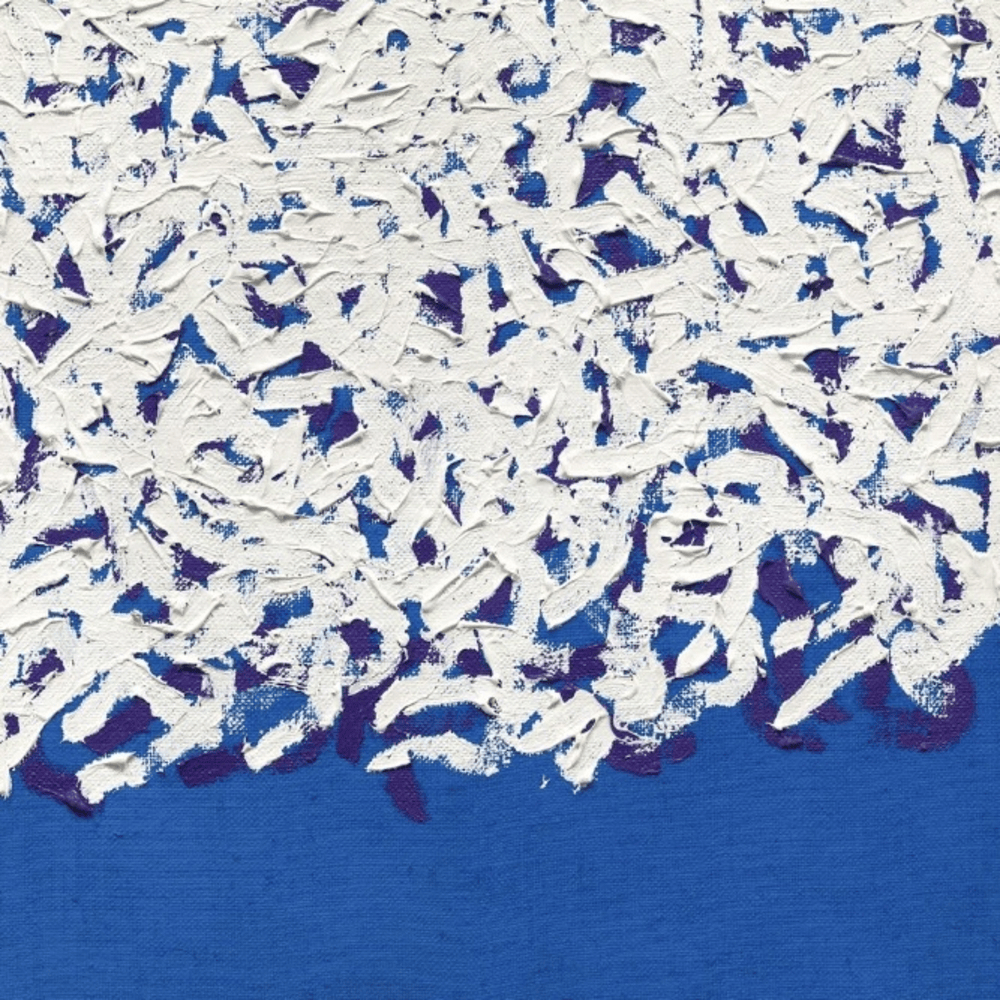
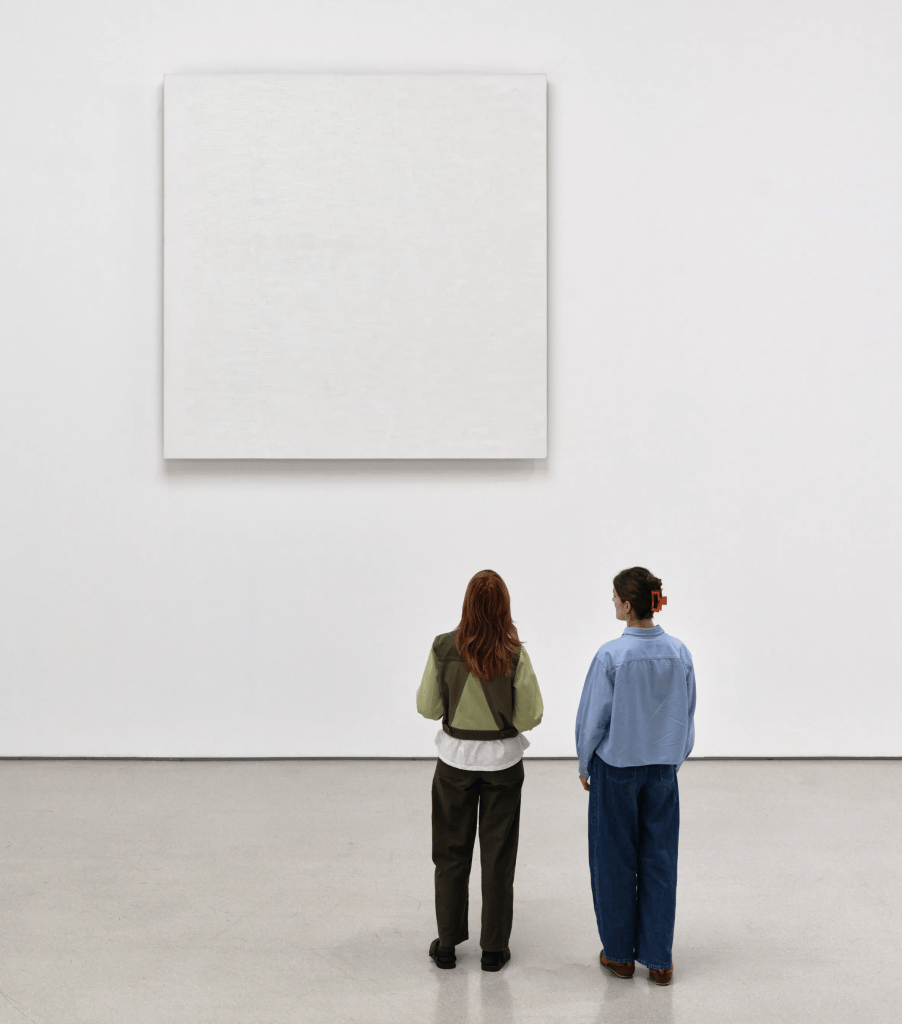
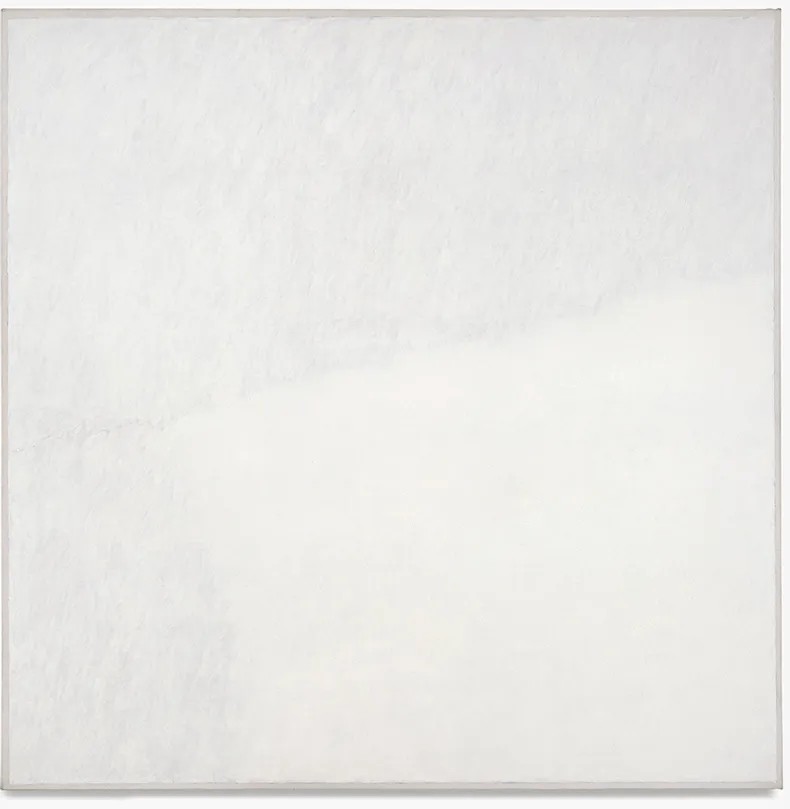
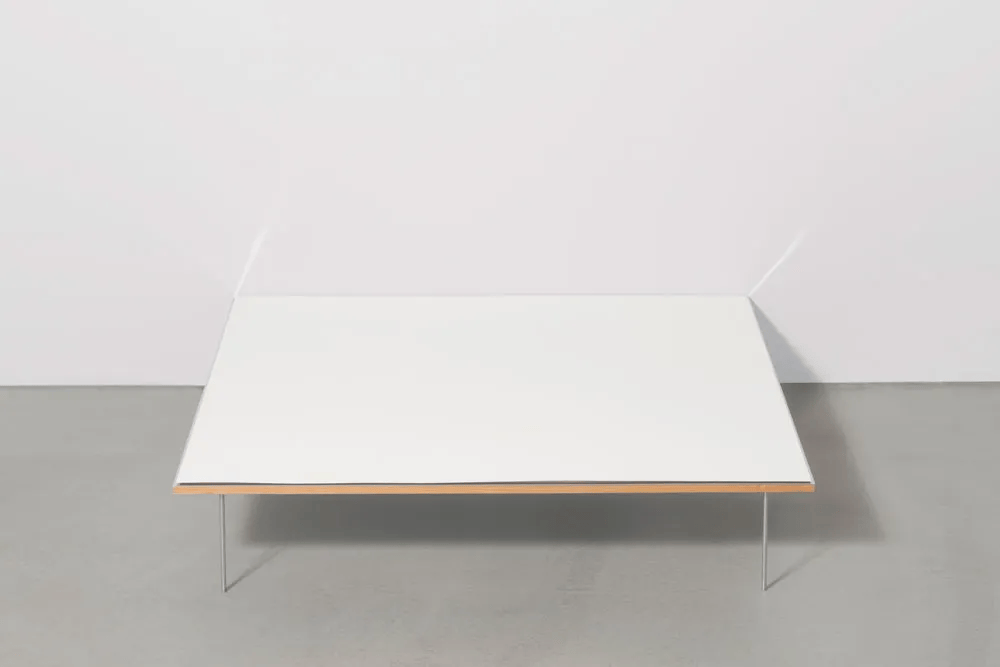
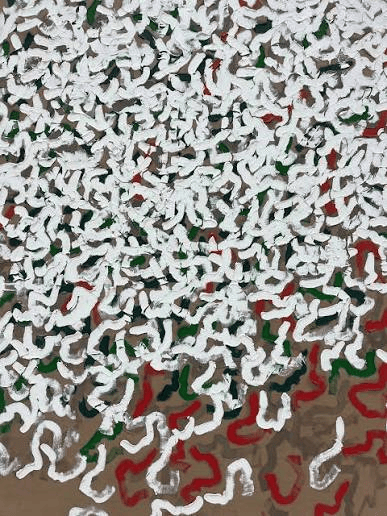
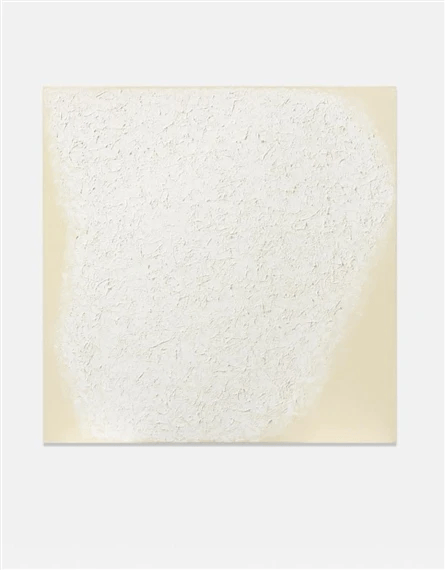
Images:1- Robert Ryman, Mission, 1980, oil and rust preventative paint on canvas with four painted metal bolts and fasteners – © The Greenwich Collection, New York; © 2026 Robert Ryman/DACS, London – 2- Robert Ryman, Pair Navigation (1984 and 2002), Private collection. Photo: Bill Jacobson Studio; © The Greenwich Collection, New York; © 2026 Robert Ryman/DACS, London – 3, 4, 5 – Exhibition views, Barbican Centre 2026/27 – Photo: Bill Jacobson Studio; © The Greenwich Collection, New York; © 2026 Robert Ryman/DACS, London – 6- Basis, 1998, oil on canvas – Private collection. Photo: Bill Jacobson Studio; © The Greenwich Collection, New York; © 2026 Robert Ryman/DACS, London