BIENNALE DE VENISE. À LA SCUOLA GRANDE DI SAN ROCCO, JAN FABRE DIALOGUE AVEC TINTORETTO, UNE PREMIÈRE POUR UN ARTISTE VIVANT
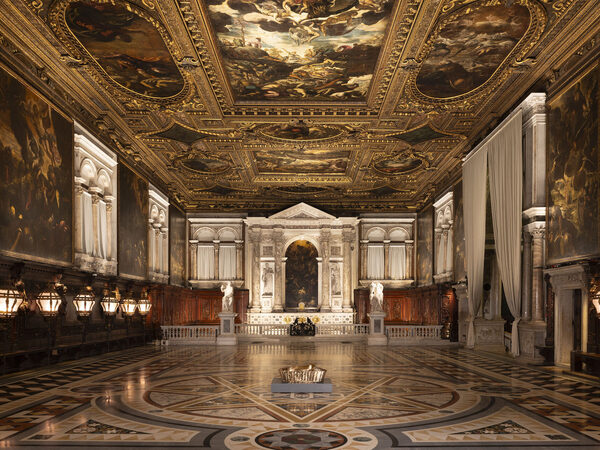
61e BIENNALE DE VENISE. JAN FABRE – « La Source Silencieuse » (The Quiet Source) – Scuola Grande di San Rocco, Campo San Rocco (sestiere San Polo), Venezia – may 9 – november 22, 2026.
Sous le commissariat de Giacinto Di Pietrantonio (Italie) et Katerina Koskina (Grèce), l’exposition propose un dialogue introspectif entre le grand maître de la Renaissance et la sculpture contemporaine . Le sulfureux et génial artiste polyvalent Jan Fabre est le premier artiste vivant invité à investir l’un des lieux d’art les plus emblématiques de Venise.
La Scuala Grande di San Rocco, qui abrite le cycle monumental de peintures du Tintoret – l’un des plus grands chefs-d’œuvre de la Renaissance vénitienne – accueillera l’une des expositions majeures de la saison culturelle à venir. Cet événement collatéral de La Biennale Arte 2026 s’inscrit dans le long parcours que Jan Fabre entretient avec Venise et sa Biennale depuis de nombreuses années. Notre « Vénitien Hollandais », a noué depuis longtemps une riche relation avec la Cité des Doges, teintée d’une dychotomie amour/haine, qui rend son rapport à la ville particulièrement créatif et sensuel.
The Quiet Source, La Source Silencieuse, met en scène un dialogue entre passé et présent à travers trois sculptures de l’artiste flamand. Installées le long de l’axe central du bâtiment, les œuvres instaurent une interaction conceptuelle et spatiale avec les peintures du Tintoret, créant une rencontre subtile entre deux langages artistiques, séparés par les siècles mais unis par une exploration commune de la lumière, de la spiritualité et de l’expérience humaine. Ce projet se déroule en parallèle de la 61e Exposition internationale d’art – La Biennale di Venezia – et est organisé par la Galleria Gaburro et la Fondation Linda et Guy Pieters.
Figure majeure de la scène artistique contemporaine, Jan Fabre (Anvers, 1958) a développé une approche interdisciplinaire qui englobe le dessin, la sculpture, l’installation, le film et la performance. Pour cette exposition, Fabre explore l’héritage du Tintoret à travers le langage de la sculpture, choisissant le bronze au silicium comme matériau principal : une matière dont la surface lumineuse amplifie la lumière et confère aux œuvres une présence surprenante, presque immatérielle.
La lumière, après tout, est essentielle à la peinture vénitienne. Par son utilisation dramatique et expressive, des artistes tels que Giorgione , Titien , Paolo Veronese et Tintoret ont transformé l’espace pictural en une dimension dynamique, fluide et vibrante. La commissaire d’exposition Katerina Koskina déclare : « Jan Fabre est un artiste révolutionnaire, iconoclaste et subversif . » Elle poursuit :Dans ce contexte, ses installations dans de grands musées (la Galerie des Offices, le Louvre, le musée de l’Ermitage) ou dans d’anciens palais et écoles de théologie (la Nuova Grande Scuola di Santa Maria della Misericordia et aujourd’hui la Scuola Grande di San Rocco), monastères et églises (l’abbaye de San Gregorio, la chapelle de Pio Monte della Misericordia) sont loin d’être fortuites. Ce sont des contextes idéaux pour une expérience esthétique, physique et existentielle activée par l’histoire, par la mise en scène et la mémoire, qui cultive le rapport dialectique entre passé et présent et souligne l’intemporalité de l’art . Comme le remarque le commissaire d’exposition Giacinto Di Pietrantonio : « Cette lumière est celle-là même par laquelle Fabre tisse des liens entre différents mondes, réfléchissant à la logique de l’origine à travers une profonde mélancolie. L’exposition met en scène une confrontation directe avec Tintoret, non pas antithétique mais coopérative ; un seuil est construit qui nous permet d’observer et de comparer deux époques à la fois extrêmement similaires et manifestement dissemblables . »
L’exposition présente trois sculptures – L’Homme qui tient l’épée (Serment de mon père) , L’Artiste en chien errant dans son panier et L’Homme qui coupe l’herbe – réalisées sur une période de cinq ans. Placées au centre des salles entre le rez-de-chaussée et les étages supérieurs du bâtiment, les œuvres forment une sorte d’épine dorsale symbolique qui traverse l’architecture comme un arbre de vie métaphorique. Ensemble, les sculptures constituent une trilogie centrée sur les thèmes de la famille, de la mémoire et de la mythologie personnelle. Chacune intègre le corps de l’artiste ; cependant, deux d’entre elles représentent les visages du père de Fabre, Edmond, et de son frère Emiel, décédé en
L’exposition s’ouvre au rez-de-chaussée avec « L’Homme qui tient l’épée (Serment de mon père) », représentant Fabre avec le visage de son père, levant une épée vers le ciel dans un geste solennel de serment. Cette posture rappelle l’archétype du chevalier, évoquant la tradition médiévale de la chevalerie et la mission historique de la Scuola Grande di San Rocco, toujours vouée à la protection des plus vulnérables. Installée dans la Sala Capitolare , « L’Artiste en chien errant dans son panier » représente l’artiste sous les traits d’un chien errant, blotti dans un panier, avec une marmotte sur le dos – une référence affectueuse à l’épouse de Fabre, Joanna . La marmotte devient ainsi un symbole d’amour, de bénédiction et de bonne fortune. Le chien rappelle également l’iconographie de saint Roch, saint patron de la Scuola, traditionnellement représenté avec le chien qui le nourrissait pendant sa maladie.
La dernière sculpture, « L’Homme qui coupe l’herbe », complète l’exposition. L’œuvre est installée dans la Sala dell’Albergo , sous la Gloire de saint Roch du Tintoret . Fabre y apparaît à quatre pattes, arborant le visage de son frère Emiel, coupant métaphoriquement des brins d’herbe avec de petits ciseaux. Ce geste évoque un rituel populaire destiné à chasser les mauvais esprits sur le chemin du retour. Conçue pour que les visiteurs s’assoient dessus, la sculpture introduit une dimension performative qui transforme le rapport du spectateur à l’œuvre, invitant à une réflexion sur la participation, la liberté et la frontière mouvante entre contemplation et interaction. Plus généralement, l’œuvre de Fabre, à l’instar de celle du Tintoret, aborde la tension entre la vie et la mort, le bien et le mal, intégrant le deuil et la mémoire dans une méditation plus large sur l’existence humaine. La posture de la figure, courbée vers le sol, évoque un geste d’humilité, de révérence et de vulnérabilité existentielle.
Jan Fabre : On ne présente plus Jan Fabre, artiste visuel, sculpteur, performer, metteur en scène au théâtre et chorégraphe, considéré comme l’une des figures les plus polyvalentes de l’art contemporain, mais aussi réputé pour sa transgressivité et son irrévérence, sources de beaucoup de « scandales » au cours de sa longue carrière. Depuis la fin des années 1970, pendant ses études à l’Institut des arts décoratifs et à l’Académie royale des beaux-arts d’Anvers, il a développé un parcours interdisciplinaire axé sur le corps humain et son potentiel expressif, en expérimentant différents matériaux et langages artistiques. Son travail profondément performatif se caractérise par un langage visuel reconnaissable, caractérisé par des formes et des motifs récurrents qui créent un dialogue constant entre l’œuvre et le public. Élevé dans un contexte catholique, Fabre a souvent exploré les espaces sacrés et les thèmes spirituels, intégrant le symbolisme biblique et les réflexions théologiques dans sa pratique.
Parmi ses principales expositions, citons le pavillon belge à la Biennale de Venise (1984), d’autres biennales internationales comme les documenta VIII et IX à Kassel, et des projets tels que Gaude Succurrere Vitae (SMAK Ghent ; GAMeC Bergamo ; Musée d’Art Contemporain Lyon ; Fundación Miró Barcelone), Homo Faber (KMSKA Anvers, 2006), From the Cellar to the Attic – From the Feet to the Brain (Kunsthaus Bregenz, 2008 ; Arsenale Novissimo Venice, 2009), PIETAS(Venice 2011 ; Antwerp 2012), Hortus/Corpus (Kröller-Müller Museum, 2011) et Stigmata : Actions and Performances 1976-2013 (MAXXI Rome, 2013 ; M HKA Anvers, 2015 ; MAC Lyon, 2016 ; Leopold Museum Vienne, 2017). Fabre a également été le premier artiste vivant à bénéficier d’une grande exposition personnelle au musée du Louvre ( L’Ange de la Métamorphose, 2008) et au musée de l’Ermitage à Saint-Pétersbourg(Knight of Despair / Warrior of Beauty, 2017)
Source : Scuola Grande di San Rocco, Venezia, par communiqué.
Image: Jan Fabre, L’artiste comme un chien errant dans son panier, détail de l’installation (2026 ; Venise, Scuola Grande di San Rocco, Upper Room). Photo : Andrea Rossetti
_____________________________________________________
VENICE BIENNALE. AT THE SCUOLA GRANDE DI SAN ROCCO, JAN FABRE IN DIALOGUE WITH TINTORETTO, A FIRST FOR A LIVING ARTIST
61st VENICE BIENNIAL. JAN FABRE – “The Quiet Source” – Scuola Grande di San Rocco, Campo San Rocco (sestiere San Polo), Venezia – May 9 – November 22, 2026.
Curated by Giacinto Di Pietrantonio (Italy) and Katerina Koskina (Greece), the exhibition offers an introspective dialogue between the great Renaissance master and contemporary sculpture. The controversial and brilliant multifaceted artist Jan Fabre is the first living artist invited to occupy one of Venice’s most iconic art venues.
The Scuala Grande di San Rocco, home to Tintoretto’s monumental cycle of paintings—one of the greatest masterpieces of the Venetian Renaissance—will host one of the major exhibitions of the upcoming cultural season. This collateral event of the Arte 2026 Biennale is part of Jan Fabre’s long-standing relationship with Venice and its Biennale. Our « Dutch Venetian » has long cultivated a rich relationship with the City of the Doges, tinged with a love/hate dichotomy, which makes his connection to the city particularly creative and sensual.
The Quiet Source presents a dialogue between past and present through three sculptures by the Flemish artist. Installed along the building’s central axis, the works establish a conceptual and spatial interaction with Tintoretto’s paintings, creating a subtle encounter between two artistic languages, separated by centuries but united by a shared exploration of light, spirituality, and the human experience. This project runs concurrently with the 61st International Art Exhibition – La Biennale di Venezia – and is organized by Galleria Gaburro and the Linda and Guy Pieters Foundation.
A major figure in the contemporary art scene, Jan Fabre (Antwerp, 1958) has developed an interdisciplinary approach encompassing drawing, sculpture, installation, film, and performance. For this exhibition, Fabre explores the legacy of Tintoretto through the language of sculpture, choosing silicon bronze as his primary material: a material whose luminous surface amplifies light and lends the works a surprising, almost immaterial presence.
Light, after all, is essential to Venetian painting. Through its dramatic and expressive use, artists such as Giorgione , Titian , Paolo Veronese , and Tintoretto transformed pictorial space into a dynamic, fluid, and vibrant dimension. Exhibition curator Katerina Koskina states: “ Jan Fabre is a revolutionary, iconoclastic, and subversive artist .” She continues: “ In this context, his installations in major museums (the Uffizi Gallery, the Louvre, the Hermitage Museum) or in former palaces and theological schools (the Nuova Grande Scuola di Santa Maria della Misericordia and now the Scuola Grande di San Rocco), monasteries, and churches (the Abbey of San Gregorio, the Chapel of Pio Monte della Misericordia) are far from accidental.” These are ideal contexts for an aesthetic, physical, and existential experience activated by history, staging, and memory, cultivating the dialectical relationship between past and present and underscoring the timelessness of art . As exhibition curator Giacinto Di Pietrantonio observes: “ This light is the very one through which Fabre weaves connections between different worlds, reflecting on the logic of origin through a profound melancholy. The exhibition stages a direct confrontation with Tintoretto, not antithetical but cooperative; a threshold is constructed that allows us to observe and compare two eras that are at once extremely similar and manifestly dissimilar .”
The exhibition features three sculptures – The Man Holding the Sword (My Father’s Oath) , The Artist as a Stray Dog in His Basket , and The Man Cutting the Grass – created over a period of five years. Positioned in the center of the rooms between the ground floor and the upper floors of the building, the works form a kind of symbolic spine that runs through the architecture like a metaphorical tree of life. Together, the sculptures constitute a trilogy centered on the themes of family, memory, and personal mythology. Each incorporates the artist’s body; however, two of them depict the faces of Fabre’s father, Edmond, and his brother Emiel, who died in
The exhibition opens on the ground floor with « The Man Holding the Sword (My Father’s Oath), » depicting Fabre with his father’s face, raising a sword to the sky in a solemn gesture of oath. This pose recalls the archetype of the knight, evoking the medieval tradition of chivalry and the historical mission of the Scuola Grande di San Rocco, which has always been dedicated to the protection of the most vulnerable. Installed in the Sala Capitolare , « The Artist as a Stray Dog in His Basket » represents the artist as a stray dog, nestled in a basket, with a marmot on its back—an affectionate reference to Fabre’s wife, Joanna . The marmot thus becomes a symbol of love, blessing, and good fortune. The dog also recalls the iconography of Saint Roch, the patron saint of the Scuola, who is traditionally depicted with the dog that nursed him during his illness.
The final sculpture, » The Man Cutting the Grass, » completes the exhibition. The work is installed in the Sala dell’Albergo , beneath Tintoretto ‘s Glory of Saint Roch . Fabre appears on all fours, bearing the face of his brother Emiel, metaphorically cutting blades of grass with small scissors. This gesture evokes a popular ritual intended to ward off evil spirits on the journey home. Designed for visitors to sit upon, the sculpture introduces a performative dimension that transforms the viewer’s relationship to the work, inviting reflection on participation, freedom, and the shifting boundary between contemplation and interaction. More generally, Fabre’s work, like Tintoretto’s, addresses the tension between life and death, good and evil, integrating mourning and memory into a broader meditation on human existence. The figure’s posture, bent towards the ground, evokes a gesture of humility, reverence, and existential vulnerability.
Jan Fabre: Jan Fabre needs no introduction. A visual artist, sculptor, performer, theater director, and choreographer, he is considered one of the most versatile figures in contemporary art, but also renowned for his transgressive and irreverent approach, the source of much controversy throughout his long career. Since the late 1970s, during his studies at the Institute of Decorative Arts and the Royal Academy of Fine Arts in Antwerp, he has developed an interdisciplinary path focused on the human body and its expressive potential, experimenting with different materials and artistic languages. His profoundly performative work is characterized by a recognizable visual language, marked by recurring forms and motifs that create a constant dialogue between the artwork and the viewer. Raised in a Catholic environment, Fabre has often explored sacred spaces and spiritual themes, integrating biblical symbolism and theological reflections into his practice.
Among his major exhibitions are the Belgian Pavilion at the Venice Biennale (1984), other international biennials such as documenta VIII and IX in Kassel, and projects such as Gaude Succurrere Vitae (SMAK Ghent; GAMeC Bergamo; Musée d’Art Contemporain Lyon; Fundación Miró Barcelona), Homo Faber (KMSKA Antwerp, 2006), From the Cellar to the Attic – From the Feet to the Brain (Kunsthaus Bregenz, 2008; Arsenale Novissimo Venice, 2009), PIETAS (Venice 2011; Antwerp 2012), Hortus/Corpus (Kröller-Müller Museum, 2011) and Stigmata: Actions and Performances 1976-2013 (MAXXI Rome, 2013; M HKA Antwerp, 2015; MAC Lyon, 2016; Leopold Museum Vienna, 2017). Fabre was also the first living artist to have a major solo exhibition at the Louvre Museum ( The Angel of Metamorphosis , 2008) and at the Hermitage Museum in Saint Petersburg (Knight of Despair / Warrior of Beauty , 2017).
Source: Scuola Grande di San Rocco, Venezia, by press release.
Image: Jan Fabre, The Artist Like a Stray Dog in His Basket, detail of the installation (2026; Venice, Scuola Grande di San Rocco, Upper Room). Photo: Andrea Rossetti